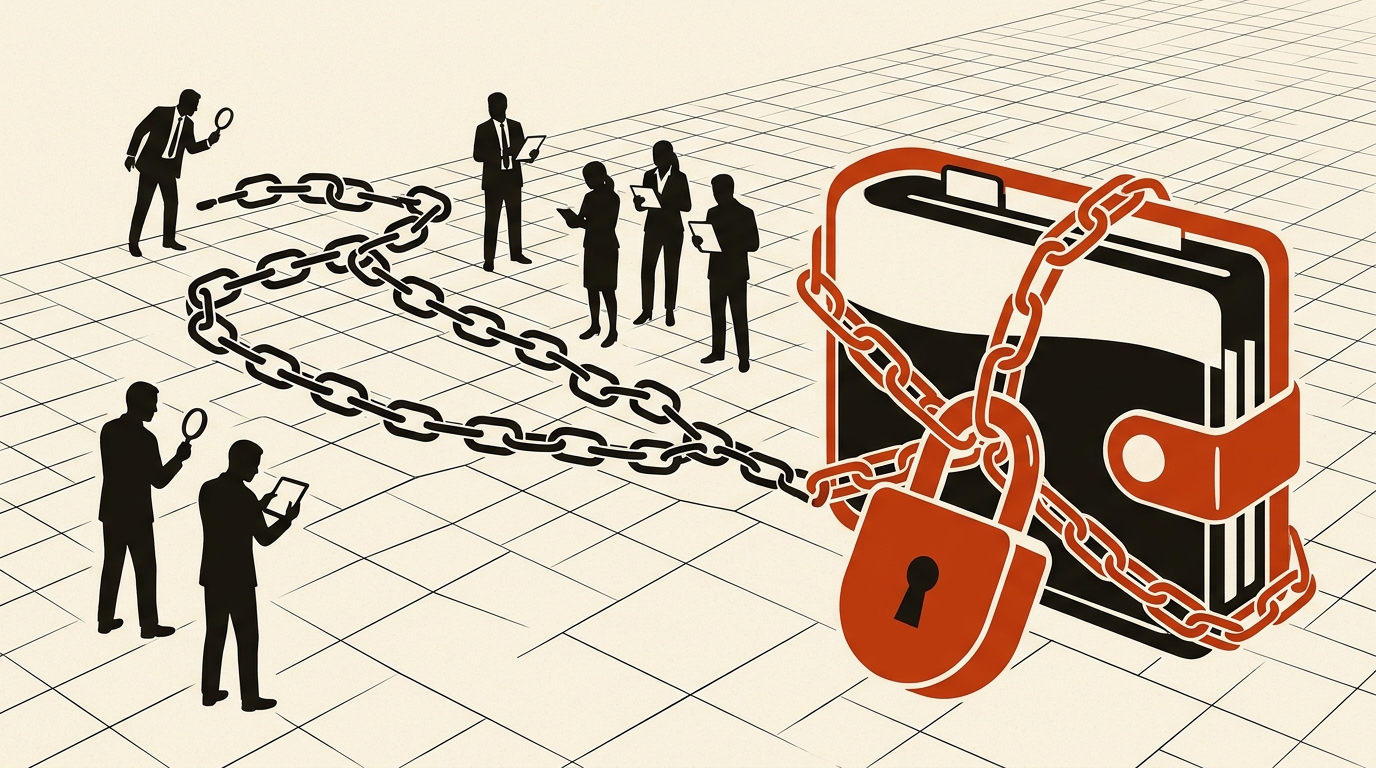
Trump Confirms FBI Investigating Nvidia CEO Jensen Huang Over Spy Allegations
President Trump revealed the FBI is actively probing Nvidia CEO Jensen Huang over his relationship with an alleged Chinese spy, wiping $250B off Nvidia's stock.
Verdict: false alarm.
Primary source: White House Press Briefing transcripts, BBC News business reporting by Michael Race and Osmond Chia, and California federal court filings →
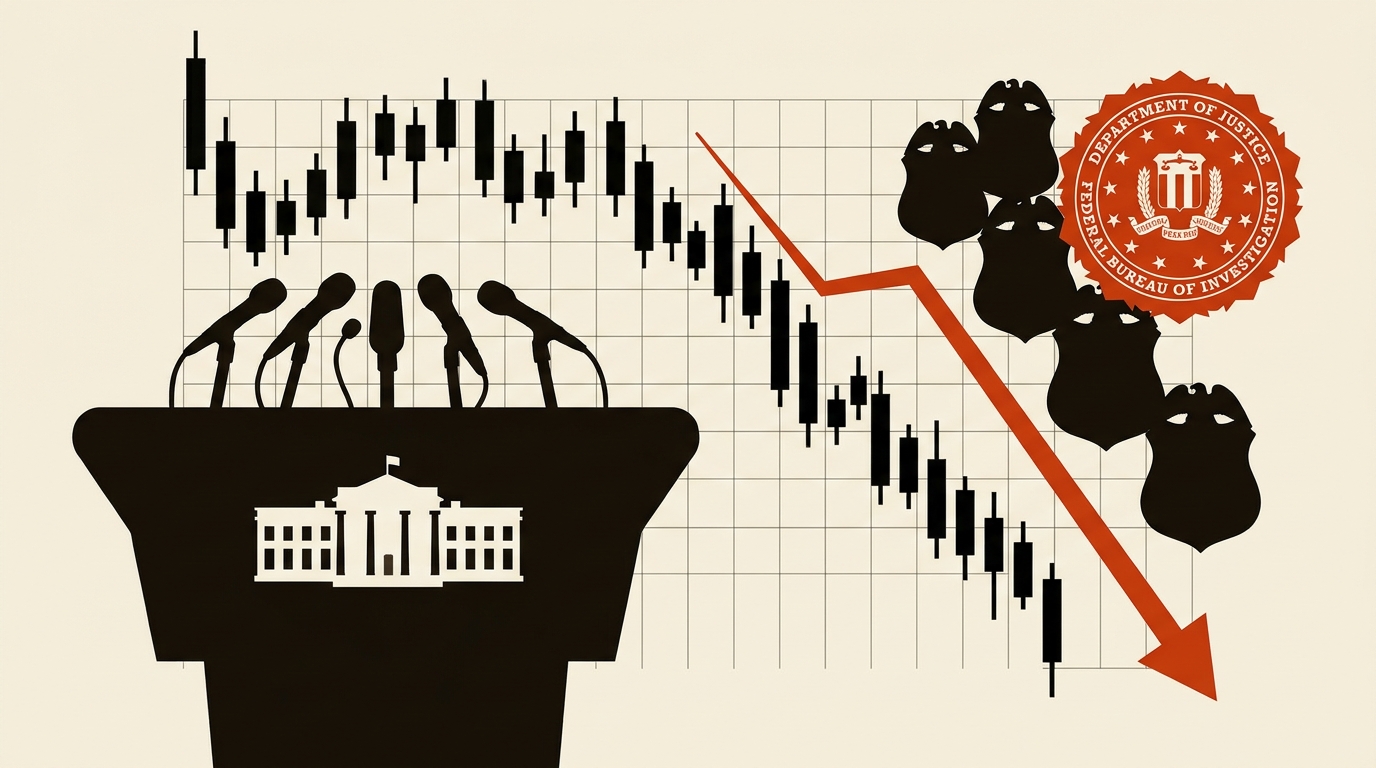
A sitting US president confirming an active FBI counterintelligence probe into the leader of the world premier AI chipmaker triggers immediate legal and market fallout.
Short answer: It is an official federal counterintelligence probe, confirmed directly by the President of the United States. Speaking from the White House, Donald Trump stated that the Federal Bureau of Investigation is actively looking into Nvidia chief executive Jensen Huang following revelations of his relationship with alleged Chinese spy Alice Huang. The confirmation triggered a swift market reaction, wiping approximately $250 billion off Nvidia’s market capitalization, sparking a federal shareholder class-action lawsuit, and prompting Congressional oversight committees to demand closed-door testimony.
1. What Donald Trump revealed about the FBI investigation
The escalation from a corporate scandal into a full-scale federal investigation occurred during an impromptu press exchange at the White House on Monday afternoon. When questioned by reporters, President Trump directly acknowledged the ongoing federal scrutiny.
Trump confirmed that the FBI had launched an inquiry into Huang’s personal interactions with Alice Huang (also known as Huang Le), the former managing director of Singaporean data center company Megaspeed. United States counterintelligence officials believe Alice Huang was operating as an intelligence asset for the People’s Republic of China, seeking to facilitate the illicit diversion of restricted semiconductor technology.
The president revealed that he had spoken directly with the Nvidia boss on Monday morning to check on his well-being.
“I asked him that question, ‘Did you have any idea she was a spy?’ He said ‘I had no idea she was a spy’ and I really believe him,” Trump told reporters. “I think that Huang was an honorable guy and I feel very confident that he will be in good shape after the investigations. I hope there is no problem, I believe he is suffering greatly.”
When pressed on when the administration first became aware of the counterintelligence risk, Trump was noticeably vague, answering only that he had been briefed “over a period of time.”
The FBI declined to provide official comment when contacted by international news agencies, adhering to standard Department of Justice policy regarding ongoing counterintelligence inquiries. In Beijing, China’s Ministry of Foreign Affairs vehemently rejected the findings, calling the espionage allegations “entirely groundless, speculative and intended to smear and malign China.”
2. The $250 billion market hit and the Marco Rubio warning memo
Wall Street responded to the president’s remarks with immediate selling pressure. Shares of Nvidia dropped more than 4% during Monday’s trading session, erasing roughly $250 billion in market value in a single afternoon.
The swift selloff reflected deep institutional nervousness over the geopolitical crosshairs facing the world’s most critical semiconductor designer. Similar to the volatile market dynamics analyzed during Wall Street equity plunges and semiconductor bubble anxieties and our initial reporting on the intelligence unmasking of Jensen Huang, investors recognize that federal scrutiny can quickly disrupt corporate sales strategies and export licensing.
Further reporting by The New York Times revealed that executive branches in Washington had been privately tracking the relationship long before this week’s public explosion:
- The Rubio Memo: Secretary of State Marco Rubio reportedly authored a classified memo sent to senior national security officials in the spring, explicitly warning that Nvidia’s leadership was involved in a close relationship with an alleged Chinese intelligence operative.
- Megaspeed Operations: Alice Huang’s company, Megaspeed, had maintained offices in Singapore’s central business district, facilitating server installations across Southeast Asia while coming under federal watch for potential transshipment of advanced AI processors into mainland China.
- The Export Bottleneck: While the White House permitted conditional sales of secondary H200 accelerators to select Chinese clients earlier in the year, cutting-edge architectures like the GB200 Blackwell remain strictly embargoed.
The revelation that the chief executive was intimately connected with an executive under export surveillance explains why broader trade relief for American chipmakers abruptly ground to a halt.
3. Shareholder lawsuits and Capitol Hill subpoenas
The crisis has rapidly spilled into the legal and legislative arenas.
On Monday afternoon, a proposed federal class-action lawsuit was filed against Jensen Huang and Nvidia Corporation in a California district court. The complaint accuses corporate management of defrauding shareholders and breaching fiduciary duties by concealing the chief executive’s personal ties to a suspected Chinese operative who was actively being tracked for semiconductor smuggling. The suit alleges that Nvidia misled the public and financial analysts regarding the true nature and risks of the relationship.
Simultaneously, Capitol Hill moved to assert jurisdiction. Leadership from several key Congressional committees dispatched a formal letter requesting Huang’s mandatory appearance at a joint closed-door classified briefing scheduled for next week.
According to copies of the letter cited by legislative correspondents, lawmakers intend to grill Huang on two specific matters:
- Enterprise Security Protocols: The adequacy of Nvidia’s internal defense barriers against foreign adversary espionage and intellectual property theft.
- Direct Interactions: The full timeline, nature, and substance of Huang’s interactions with reported PRC intelligence asset Alice Huang.
While Nvidia has commissioned its own independent internal review and maintains that company trade secrets and American national security remain uncompromised, Congressional oversight presents an entirely unpredictable political arena. Similar to how law enforcement agencies pursue organized cargo theft syndicates targeting physical GPU hardware, federal lawmakers are determined to establish whether foreign intelligence services obtained access through personal proximity.
4. Inside Nvidia: Business as usual versus long-term exposure
At Nvidia’s corporate headquarters in Santa Clara, California, rank-and-file employees reported that operations proceeded normally, even as international broadcast trucks camped outside campus entrances.
Huang reiterated his commitment to cooperate fully with both internal corporate reviewers and federal investigators, issuing a statement affirming he was “committed to protecting Nvidia and supporting America’s national security.”
Yet industry analysts note that the company faces several enduring structural challenges:
- Key-Man Dependence: Unlike peers with distributed executive management, Nvidia’s product roadmap, engineering culture, and strategic customer relationships remain deeply centralized around Huang.
- Export Control Chill: Any future attempt by Nvidia to secure export licenses for China will now be viewed through an intense counterintelligence lens by the Department of Commerce and the Pentagon.
- Diplomatic Entanglement: Trump openly remarked that Chinese President Xi Jinping would likely “ask me about it” during their next bilateral meeting, guaranteeing that the Silicon Valley executive will remain a central pawn in great-power competition.
While the president’s expression of personal trust provides temporary political breathing room for Huang, the combination of an active FBI probe, shareholder litigation, and Congressional scrutiny ensures this scandal will shape the AI industry for months to come.
Sources to check yourself
- BBC News Business Desk: Reporting by Michael Race and Osmond Chia covering President Trump’s White House remarks and Nvidia market losses.
- United States District Court for the Northern District of California: Shareholder class-action filings regarding executive disclosures and export risk.
- United States House Committee on Foreign Affairs and Select Committee on the CCP: Official correspondence requesting executive closed-door testimony.
- White House Press Office: Official transcript of the presidential press gaggle covering semiconductor policy and FBI counterintelligence inquiries.
Frequently asked questions
Q: Did Donald Trump say Jensen Huang committed a crime? A: No. President Trump defended Huang personally, stating he believed Huang had no idea Alice Huang was an intelligence operative and describing him as an honorable person who has done great work for the country. However, Trump confirmed the FBI is actively investigating the matter.
Q: Why did Nvidia’s stock lose $250 billion in one day? A: Investors reacted to the uncertainty of an active FBI counterintelligence inquiry, the filing of a shareholder class-action lawsuit, and the likelihood of tighter federal export restrictions that could jeopardize international AI chip sales.
Q: Is Jensen Huang scheduled to testify before Congress? A: Several Congressional committees sent a formal request for Huang to appear at a closed-door classified briefing next week to discuss counterintelligence defenses and his interactions with Alice Huang. Nvidia has not yet confirmed whether he will attend.
Reader discussion
Conversation for this story opens with memberships. Until then: found an error? Report it — we correct visibly.