The $11.4M Nvidia Heist: Inside the Organized Thefts Targeting AI Data Centers
A shipment of Nvidia data center hardware vanished between Oakland and Fort Worth, highlighting a wave of sophisticated heists targeting AI chips.
Verdict: false alarm.
Primary source: Bay Area News Group police investigation records and TechSpot reporting by Daniel Sims →
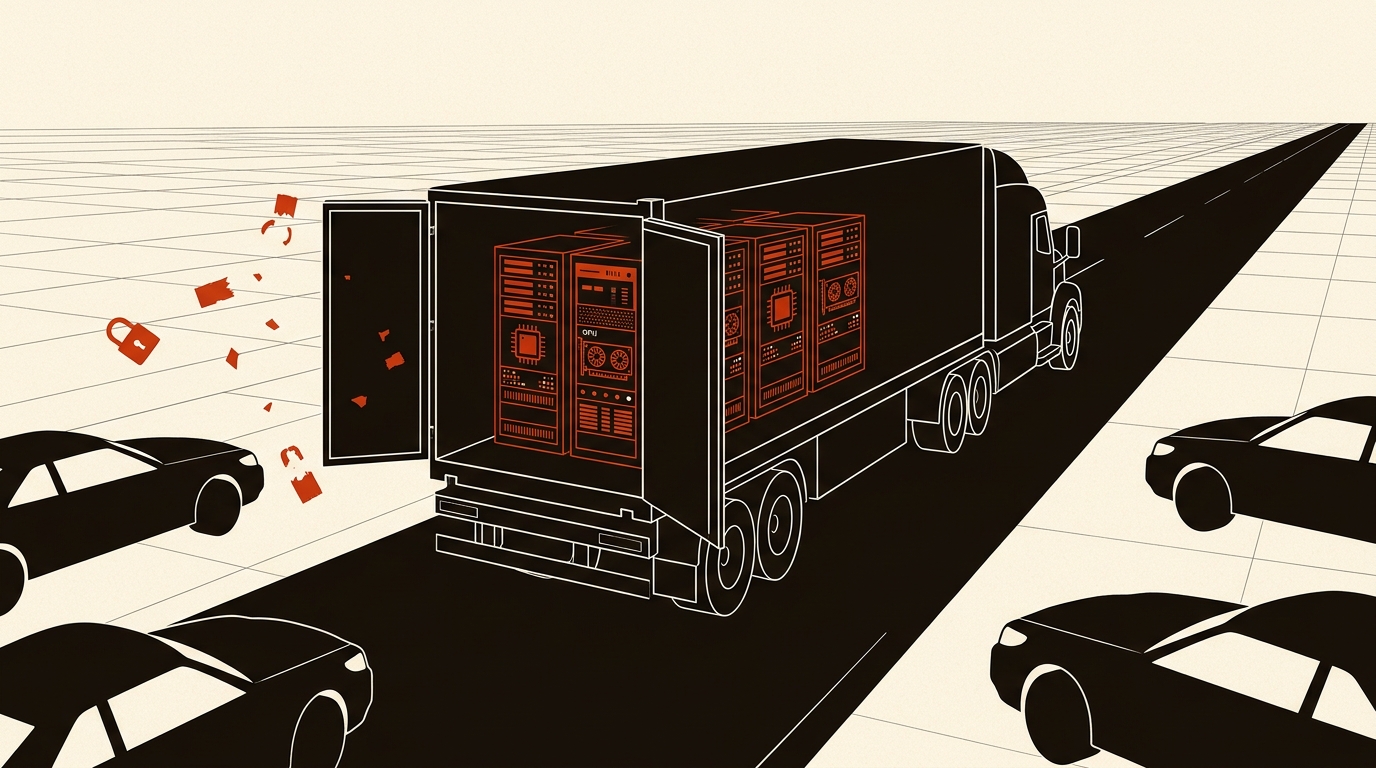
High-end AI chips are now so valuable that organized cargo rings use GPS spoofing, escort ramming, and decoy trucks to steal them like gold bars.
Short answer: It was not a paper mix-up. Professional cargo syndicates stole six pallets of Nvidia server gear worth $11.4 million while the load moved from California to Texas. Criminal crews are now treating high-end graphics chips the way street thieves once treated copper piping, deploying signal jammers, bogus carrier identities, and chase cars to intercept deliveries before they ever reach a server rack.
1. How six pallets of AI chips disappeared between California and Texas
The theft began on August 29, 2026. A freight hauler pulled up to an Oakland logistics depot to collect six shrink-wrapped pallets of enterprise AI components. The destination was a major data center buildout in Fort Worth, Texas.
On paper, everything looked routine. The bill of lading matched, the pickup paperwork cleared dispatch, and the truck rolled out toward the interstate. But the shipment never reached Texas.
In fact, nobody inside the logistics chain sounded the alarm until early September. By the time depot managers realized the pallets were missing, the cargo trail had gone cold.
California investigators later traced the carrier vehicle as it moved south through San Bernardino County. Highway tracking records showed the truck made multiple multi-hour stops in remote staging yards. That is where police suspect the original pallets were transferred to secondary vehicles or broken down for black market distribution. Shortly after those stops, investigators lost electronic track of the vehicle entirely. As of November 2026, police have made zero arrests.
What makes this incident striking is that freight handlers tried to hide the valuable cargo. Shippers knew that Nvidia-branded packaging was a magnet for highway hijackers. To keep the load safe, handlers booked the shipment under a truck displaying the logo of a commercial food distributor. The disguise failed completely. Thieves clearly had inside knowledge of what sat inside the trailer, intercepting the cargo despite the decoy branding.
2. Why GPUs became the new copper for organized cargo gangs
For decades, industrial thieves focused on copper wire, prescription pharmaceuticals, and designer sneakers. Today, enterprise computing processors have rewritten the economics of cargo crime.
An Nvidia server rack containing high-end accelerators can fetch between $250,000 and $400,000 per chassis. A single pallet packed with enterprise graphics units carries more cash value than an entire truckload of luxury electronics, yet it takes up only a fraction of the physical space. That compact density makes AI processors the dream target for organized theft rings.
The $11.4 million Oakland loss is not an isolated crime. It is part of an accelerating crime pattern documented across key logistics hubs:
- Northern California (2025): Investigations conducted across Fremont and Union City uncovered more than $7.5 million in stolen hardware belonging to Nvidia and related server vendors.
- Midwest Recovery (June 2026): Federal and state police in Chicago managed to locate and recover $1.3 million worth of stolen computing equipment after hidden beacon transmitters broadcasted coordinates from an illicit warehouse.
- Airport Thefts (Autumn 2026): Three freight workers were charged after slipping $470,000 in consumer-tier RTX 5090 cards out of an air cargo hub, a theft uncovered only when a stolen unit showed up on an online resale platform.
Similar to our reporting on historic stock market selloffs following the midterm elections and the massive financial sums circulating around the six billion dollar cryptocurrency platform theft, physical AI hardware is now trading at such intense premiums that criminals will take massive risks to corner supply.
Sometimes those risks lead to comical blunders. In September 2026, a freight crew intercepted and stole two trailers displaying prominent Nvidia graphics. The hijackers expected to uncover dozens of enterprise computing nodes. Instead, when they cracked open the rear doors, they found 20,000 pounds of industrial sand. The trailers belonged to PlusAI, an autonomous trucking research company that used heavy bags of sand to simulate gross vehicle weight during safety testing.
Yet most encounters are far more calculated than funny.
3. The new playbook: GPS spoofing, phishing, and escort ramming
Cargo theft has moved far beyond breaking padlocks at highway rest stops. Today’s syndicates run hybrid operations that combine digital fraud with street muscle.
The primary entry point is identity fraud on digital freight boards. Thieves hack into legitimate trucking company accounts or forge Department of Transportation credentials. When an electronics manufacturer posts a high-value load on an open exchange, the fraudulent carrier bids on the contract, shows up with legitimate-looking paperwork, loads the pallets, and simply drives away.
When freight brokers require real-time satellite tracking, criminal syndicates deploy military-style countermeasures:
- GPS Jammers and Spoofers: Crews install portable signal blockers in vehicle cabs that broadcast false satellite coordinates, making a truck appear parked in Arizona while it actually offloads in a desert warehouse.
- Physical Ramming: For extremely high-value runs, logistics firms hire private security vehicles to escort cargo trucks. Police reports in California and the Southwest document multiple instances where criminal chase cars deliberately slammed into escort sedans to force them off the road.
- Ghost Warehousing: Stolen shipments rarely sit in public storage. They move into temporary industrial yards where teams strip serial numbers and repackage motherboards within six hours of the heist.
To combat this surge, manufacturers and freight carriers are spending millions on counter-surveillance. Shippers are mounting automated license plate reader cameras from Flock Safety at gate entrances, running background audits on third-party drivers, and inserting cellular and satellite tracker pucks directly into server motherboards.
4. What this means for AI data centers and supply chains
The ripple effects of these thefts go well beyond insurance claims. The global push to build artificial intelligence data centers has placed cloud infrastructure on razor-thin deadlines.
When six pallets of accelerator hardware disappear, replacing those units does not happen overnight. Enterprise customers face delivery delays lasting three to five months. With server clusters booked months in advance, a single missing shipment can derail software rollout schedules for hyperscale computing providers.
Insurance carriers are responding with severe restrictions. Underwriters are refusing to insure high-end semiconductor shipments unless carriers provide two-driver teams, 24-hour continuous tracking, and armed vehicular escorts. Those requirements drive up transportation overhead, adding tens of thousands of dollars to every delivery run.
At the same time, the stolen chips feed a shadowy international gray market. While cloud giants verify equipment provenance through hardware security certificates, secondary hosting providers, overseas brokers, and unauthorized rendering labs routinely buy discounted gear with few questions asked. Just as we analyzed in our breakdown of the largest institutional data and infrastructure leaks, when valuable digital assets lack physical control, the black market moves instantly to monetize the void.
Sources to check yourself
- Bay Area News Group: Investigative reporting on Northern California freight thefts and the $11.4 million Oakland case records.
- TechSpot: Industry analysis by Daniel Sims tracking data center component thefts and supply chain disruptions.
- FreightWaves Supply Chain Intel: National cargo theft statistics and fraudulent freight pickup analysis.
- California Highway Patrol Cargo Theft Interdiction Program: Public advisories on GPS spoofing and commercial vehicle hijacking trends.
Frequently asked questions
Q: Why do thieves target Nvidia enterprise GPUs instead of regular consumer electronics? A: Enterprise server GPUs carry an extraordinarily high value per pound. While a pallet of televisions or gaming consoles might be worth $30,000, a single pallet of enterprise AI hardware can exceed $2 million, making it far more profitable and easier to hide.
Q: Can Nvidia simply disable the stolen GPUs remotely? A: Enterprise GPUs themselves do not possess built-in satellite kill switches that shut them down over the air. While cloud platforms authenticate hardware keys during firmware initialization, unmanaged private data centers and overseas buyers can operate the hardware on private networks without connecting to Nvidia authorization servers.
Q: How do thieves find out which trucks contain AI chips? A: Criminal rings gain intelligence through compromised digital freight brokerage accounts, compromised dispatch emails, and insiders working at logistics warehouses who leak shipping manifests and vehicle route details.
Reader discussion
Conversation for this story opens with memberships. Until then: found an error? Report it — we correct visibly.