Inside the Jensen Huang Scandal: Personal Affair, Spy Probe, and Nvidia Stakes
Nvidia CEO Jensen Huang faces a personal and national security storm after intelligence unmasking revealed an affair with a suspected Chinese operative.
Verdict: false alarm.
Primary source: The New York Times intelligence investigation by David Sanger and BBC News reporting by Lily Jamali and Peter Hoskins →
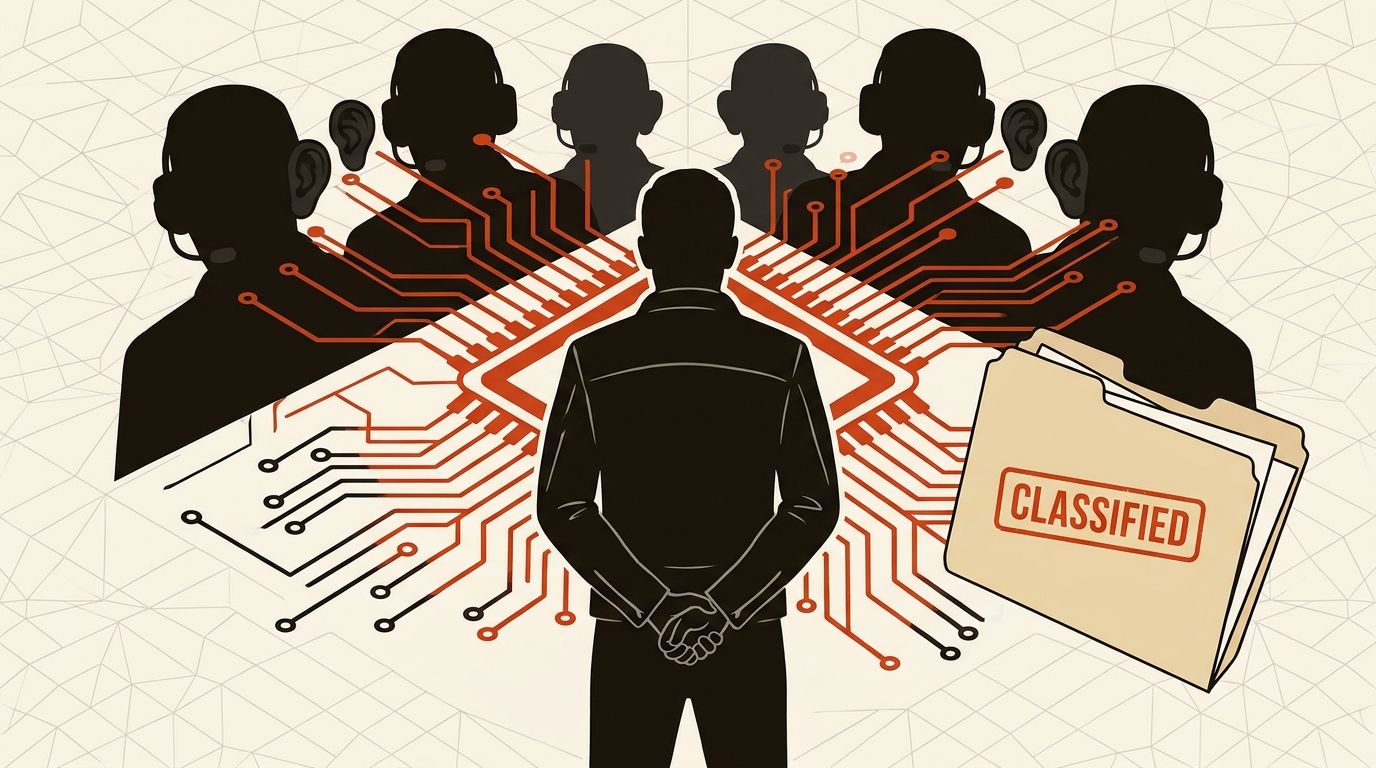
With Nvidia powering the global AI boom, personal entanglement with a suspected foreign intelligence operative threatens chip export diplomacy and board governance.
Short answer: It is far more than a private domestic affair. When Jensen Huang publicly admitted to marital infidelity on Sunday, he addressed only half of the crisis. Federal intelligence reports revealed that the woman he was involved with, Megaspeed executive Alice Huang (also known as Huang Le), was identified by United States counterintelligence as an operative recruited by China’s primary civilian intelligence agency. With Nvidia sitting at the center of the global artificial intelligence arms race, the revelation has collided directly with federal export controls, White House relationships, and Silicon Valley board governance.
1. What the federal intelligence unmasking actually revealed
The scandal broke publicly through an investigation published by The New York Times and corroborated by BBC News correspondents Lily Jamali and Peter Hoskins. According to intelligence officials, the initial investigation did not begin by targeting Nvidia or its chief executive.
Instead, federal counterintelligence teams were monitoring Alice Huang, a senior executive at Megaspeed, a Singapore-based data center operator. Megaspeed had previously attracted federal scrutiny over allegations that it helped funnel export-controlled enterprise graphics processing units into mainland China. While Nvidia had previously maintained that those third-party diversion allegations were investigated and debunked, American intelligence agencies continued active electronic surveillance on Alice Huang.
During that surveillance, investigators intercepted frequent private communications between Alice Huang and a high-profile American citizen. Under the strict legal privacy protocols governing Foreign Intelligence Surveillance Act intercepts, the American’s identity was initially redacted in internal intelligence memos.
When national security officials requested an official intelligence unmasking to evaluate whether sensitive defense technologies or export control strategies were compromised, the name revealed was Jensen Huang.
United States officials concluded that Alice Huang had been recruited by the Ministry of State Security, China’s premier civilian intelligence and counter-espionage agency. While investigators have not yet disclosed what specific technical or policy information may have been shared, the direct romantic link between China’s suspected intelligence asset and the architect of Western AI silicon triggered instant national security alarm bells in Washington.
2. From “Taylor Swift of Tech” to public confession
For three decades, 63-year-old Jensen Huang has cultivated one of the most carefully protected personal reputations in technology. Born in Taiwan in 1963, Huang moved to the United States at age nine, earned electrical engineering degrees from Oregon State University and Stanford, worked at chipmaker AMD, and co-founded Nvidia in 1993 alongside Chris Malachowsky and Curtis Priem.
Throughout Nvidia’s explosive ascent to a $4.5 trillion market valuation, Huang presented himself as the ultimate family man. He met his wife Lori when they were undergraduate engineering lab partners at Oregon State, marrying in 1985. The couple runs the Jen-Hsun and Lori Huang Foundation, which manages more than $9 billion in philanthropic assets. Both of his adult children, Spencer and Maddison, work inside Nvidia, and Huang frequently credited his wife and daughter with creating his trademark black leather jacket public persona.
That family-first image shattered on Sunday when Huang released a direct public statement:
“I was unfaithful to my wife. My actions hurt her and our children. There is no excuse for what I did. I am deeply sorry.”
While the apology sought to frame the matter as an agonizing domestic mistake, the presence of foreign intelligence operatives elevates the fallout far beyond a personal marital fracture.
3. The Washington connection and the battle over China chip exports
The timing of this disclosure carries immense geopolitical weight. Since 2022, the United States Department of Commerce has imposed sweeping export restrictions on advanced semiconductors. Washington’s stated goal is simple: prevent Beijing from obtaining the cutting-edge computing chips needed to train advanced military models and autonomous weapons systems.
Those rules hit Nvidia directly in the balance sheet. Huang previously acknowledged that Nvidia’s market share in China plummeted from roughly 95% to near zero following federal bans on the A100, H100, and Blackwell architectures.
In response, Huang engaged in relentless shuttle diplomacy between Washington, Silicon Valley, and Beijing. He argued publicly and privately that cutting off American tech exports would only accelerate China’s domestic chip development while depriving American corporations of hundreds of billions in revenue.
Huang had developed an unusually close relationship with Donald Trump. At a recent White House artificial intelligence summit featuring 42 tech leaders, the president placed Huang directly at his side alongside Elon Musk. Huang lobbied aggressively for federal approval to export modified, non-cutting-edge accelerators to Chinese enterprise clients.
The intelligence revelations appear to explain why those export exemptions stalled. Following the news of the investigation, the political atmosphere chilled instantly. When questioned by reporters, Trump visibly created distance:
“I just know he’s a fine person, but you never know what’s going on,” Trump commented, adding that Huang had “done an amazing job for our country,” while confirming he had not spoken with the Nvidia boss since the intelligence findings surfaced.
Similar to the high-stakes supply chain dynamics we examined during the multi-million-dollar cargo thefts targeting enterprise Nvidia servers and the systemic vulnerability of institutional infrastructure and data breaches, technological dominance depends entirely on operational security. When physical chips or corporate leadership become compromised, national defense regulators step in with heavy hands.
4. Why Nvidia board is standing by its founder
In most Fortune 500 corporations, an extramarital relationship with an executive of a supplier or customer undergoing counterintelligence scrutiny would trigger an immediate executive leave of absence. At Nvidia, the calculation is radically different.
Nvidia’s board of directors announced an internal review on Sunday while simultaneously issuing an unequivocal vote of confidence in Huang and his executive leadership team. Sources familiar with board deliberations indicate that removing Huang is extraordinarily unlikely for three pragmatic reasons:
- The $4.5 Trillion Key-Man Risk: Huang does not merely run Nvidia; he built the modern AI hardware ecosystem from scratch. From donating the very first DGX-1 supercomputer to OpenAI in 2016 to designing CUDA and high-bandwidth NVLink networking, Wall Street views Huang as irreplaceable.
- Absence of a Succession Plan: Nvidia has no designated co-CEO or clear corporate heir apparent. Ousting Huang could trigger a catastrophic selloff across tech equities, echoing the volatility seen in broader Wall Street market selloffs and tech bubble anxieties.
- Corporate Defenses: In public filings and official statements to broadcasters, Nvidia maintained that it was never formally alerted by federal authorities to an active espionage threat, stating: “We trust that if we were the target of a genuine threat, the US government would have notified us.”
Nevertheless, Congressional oversight committees are already preparing inquiries into whether corporate travel logs or proprietary export compliance communications intersected with the relationship. For Silicon Valley’s most powerful executive, navigating the technical complexities of artificial intelligence may prove far simpler than surviving Washington’s national security spotlight.
Sources to check yourself
- BBC News Technology and Business Desks: Reporting by Lily Jamali and Peter Hoskins on Jensen Huang’s personal and intelligence scrutiny.
- The New York Times: National security investigation by David Sanger detailing FISA surveillance warrants and executive unmasking protocols.
- Bloomberg Billionaires Index and Financial Analytics: Wealth tracking, foundation disclosures, and Nvidia corporate governance records.
- United States Department of Commerce Bureau of Industry and Security: Export Administration Regulations governing advanced computing and semiconductor manufacturing items.
Frequently asked questions
Q: Did Jensen Huang leak classified semiconductor blueprints to China? A: Federal investigators have not alleged or presented evidence that classified blueprints or restricted intellectual property were passed. The intelligence inquiry centers on counterintelligence surveillance of an executive recruited by China’s Ministry of State Security and whether informal communications compromised export policy or security boundaries.
Q: Who is Alice Huang and what is Megaspeed? A: Alice Huang, also known as Huang Le, is a senior executive at Megaspeed, a Singapore-based data center operator. The firm had previously been scrutinized over suspected gray-market rerouting of artificial intelligence accelerators into mainland China.
Q: Will Jensen Huang step down as Nvidia chief executive? A: Nvidia’s board announced an internal inquiry while formally reiterating confidence in Huang’s leadership. Given Nvidia’s $4.5 trillion market capitalization and the absence of an obvious successor, analysts and industry insiders consider his forced departure highly unlikely.
Reader discussion
Conversation for this story opens with memberships. Until then: found an error? Report it — we correct visibly.