Why North Korea's Elite Hackers Are the Prime Suspect in the $6.3B Binance Heist
Blockchain sleuths point to North Korea's Lazarus Group for the record $6.3 billion Binance theft. Here is how an isolated nation built the world's top cyber-heist machine.
Verdict: false alarm.
Primary source: FBI Cyber Division Advisories and UN Security Council Panel of Experts Sanctions Reports →
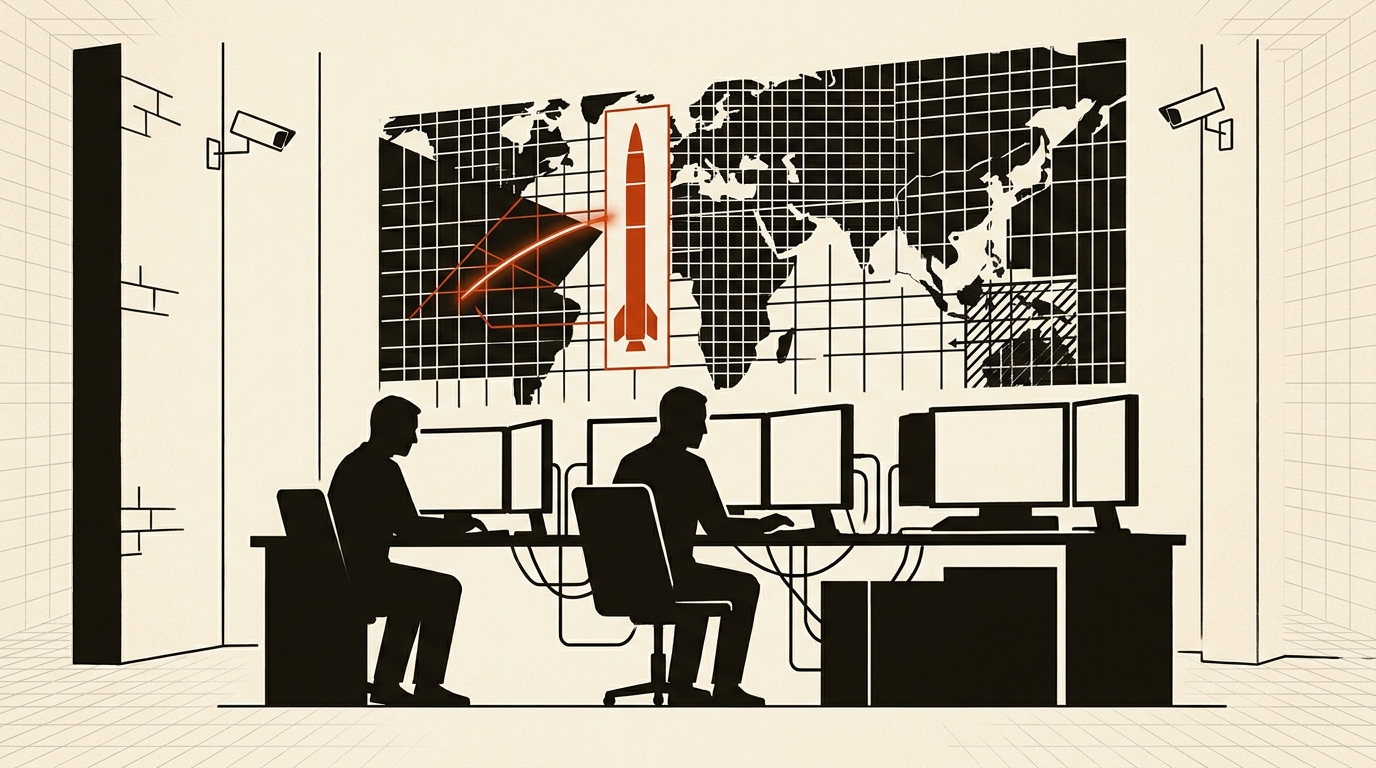
North Korea is the only government systematically using cryptocurrency theft to generate national revenue and finance its ballistic missile and nuclear arms programs.
Short answer: Leading blockchain intelligence firms have identified North Korea’s state-sponsored Lazarus Group as the primary culprit behind the record $6.3 billion Binance hack. While social media rumors blamed independent cyber bandits, on-chain evidence tells a different story. North Korea runs a disciplined, government-operated cyber army under its military intelligence wing. Over the past decade, Pyongyang transformed its hackers from political pranksters into a lethal financial weapon. Cut off from normal global commerce by strict international sanctions, Kim Jong Un’s regime uses cryptocurrency theft as an essential national revenue stream to fund weapons development.
1. From Sony Pictures to $6.3 billion: The evolution of Lazarus
When most people think of North Korea, they picture an isolated, impoverished nation where ordinary citizens have no access to the internet and electricity flickers out at night.
That image makes it hard to believe North Korea could pull off the most lucrative digital heist in human history. Yet over the last twelve years, Pyongyang quietly built one of the most formidable offensive cyber warfare operations on Earth.
The group’s emergence followed a distinct evolutionary path:
- 2014 Sony Pictures hack: Lazarus burst into global headlines by raiding Sony servers. The attack was driven by political revenge over The Interview, a Hollywood comedy depicting the assassination of Kim Jong Un. The hackers leaked embarrassing internal emails and destroyed studio computer networks.
- 2016 Bangladesh Bank heist: Realizing cyber operations could generate hard cash, the regime shifted toward financial theft. Operatives hacked the SWIFT banking system to attempt a $1 billion heist, eventually escaping with $81 million.
- 2022 Axie Infinity exploit: Lazarus pivoted toward the fast-growing and loosely regulated crypto ecosystem. In March 2022, they stole $620 million from the Ronin Network bridge, proving decentralized protocols were ripe for plunder.
- 2025 Bybit breach: Last year, the FBI attributed a record $1.5 billion theft on the Bybit exchange directly to TraderTraitor, a specialized division inside Lazarus.
Now, the initial $6.3 billion Binance breach represents the crowning achievement of that decades-long campaign.
2. Inside Pyongyang’s hacker factory: How the regime grooms cyber warriors
North Korea’s cyber capabilities are not random. They are the product of a rigorous, state-run educational pipeline overseen by the Reconnaissance General Bureau, North Korea’s premier foreign intelligence service.
Defector testimonies and United Nations Security Council investigative reports describe a relentless talent-spotting machine:
- University recruitment: The regime scouts mathematically gifted teenagers from middle schools across the country. These students are sent to elite academies in Pyongyang, such as Kim Chaek University of Technology and Kim Il Sung University.
- Foreign safe houses: Because domestic internet connections are limited and heavily monitored, top cyber operatives are deployed abroad. Many work out of commercial front companies located across the border in northeastern China, Southeast Asia, and Eastern Europe.
- Military discipline: Unlike Western hackers who work for personal profit or bragging rights, North Korean operatives are treated as elite military officers. Their families remain in Pyongyang as effective collateral, ensuring absolute loyalty to the state.
- AI-assisted tooling: Blockchain security firms report that Lazarus has incorporated artificial intelligence tools to automate social engineering attacks, write custom malware, and map exchange network architectures at machine speed.
By combining military discipline with cutting-edge software exploits, Pyongyang created a cyber mercenary force that rivals the world’s most advanced intelligence agencies.
3. The dark economics: Hacking for missiles and nuclear fuel
Why does North Korea devote so much energy to stealing digital coins?
The answer lies in geopolitics. Because of its nuclear weapons testing and ballistic missile launches, North Korea faces the most comprehensive economic embargo in modern history. The United Nations and Western governments have cut off almost all legal avenues for Pyongyang to earn foreign currency.
The regime cannot easily sell minerals, textiles, or manufactured goods on global markets. Cryptocurrency theft solves that problem:
- Sanctions-proof revenue: Digital currencies operate on borderless, decentralized blockchains that do not require approval from American banks or international regulators.
- Laundering into hard cash: Once tokens are stolen, operatives route them through multi-chain bridges and privacy tools. They trade tokens through secondary shadow brokers in Asia, converting digital coins into US dollars and Chinese yuan to buy rocket fuel, computer chips, and luxury goods.
- Funding the nuclear arsenal: Western intelligence agencies and the United Nations estimate that cybercrime now finances up to half of North Korea’s foreign currency revenues. Stolen crypto directly underwrites the regime’s uranium enrichment programs and intercontinental ballistic missile tests.
Pyongyang has consistently denied involvement in international cybercrime, dismissing the allegations as Western propaganda. However, immutable blockchain ledgers, recovered IP addresses, and forensic code signatures tell an undeniable truth.
As federal agents continue the frantic global asset freeze, this historic heist demonstrates that cryptocurrency security is no longer just about personal wealth. It is directly tied to global security and state-sponsored warfare, matching broader patterns seen in Kim Jong Un’s regime and sanctions evasion and global state-backed cyber operations.
Sources to check yourself
- United Nations Security Council Sanctions Committee: Read annual panel reports on illicit North Korean revenue generation and cyber theft.
- Federal Bureau of Investigation Cyber Division: Inspect public advisories regarding TraderTraitor malware indicators and Lazarus blockchain addresses.
- TRM Labs Threat Intelligence: Examine forensic comparisons between the Bybit and Binance infrastructure breaches.
- Chainalysis 2026 Crypto Crime Report: Review long-term transaction volume data tracking North Korean cryptocurrency theft and laundering funnels.
Frequently asked questions
Q: Does North Korea have enough internet access to run these attacks? A: Ordinary North Korean citizens do not have access to the global internet. However, state intelligence units operate dedicated, high-speed fiber-optic satellite connections through Chinese and Russian telecommunications providers.
Q: How do researchers know the hackers are working for North Korea? A: Blockchain analytics companies like Chainalysis and TRM Labs track distinct digital fingerprints. These include reusable laundering code, shared smart-contract exploit tools, specific operating hours matching Asian time zones, and wallet deposit addresses linked to previous Lazarus operations.
Q: Can international sanctions stop North Korean hackers? A: Sanctions allow governments to freeze bank accounts and sanction mixers. However, because North Korea is already completely cut off from the global financial system, traditional legal sanctions have limited deterrent effect on regime operatives.
Q: Why don’t hackers just steal cash directly from banks? A: Traditional banks operate through the SWIFT network, which has strict anti-money laundering controls and central authorities that can reverse wire transfers. Cryptocurrency transactions are irreversible once confirmed on the blockchain, making crypto exchanges a far more lucrative target.
Reader discussion
Conversation for this story opens with memberships. Until then: found an error? Report it — we correct visibly.