Are Terror Attacks on the rise in India 2026? What Data and Police Files shows
From tampered barcodes in Malappuram to whistleblower leaks in Bengaluru, here is the full breakdown of 2026's five most controversial explosive seizures.
Verdict: misleading.
Primary source: National Investigation Agency (NIA) FIR filings, State Police First Information Reports, and Explosives Act compliance registries →
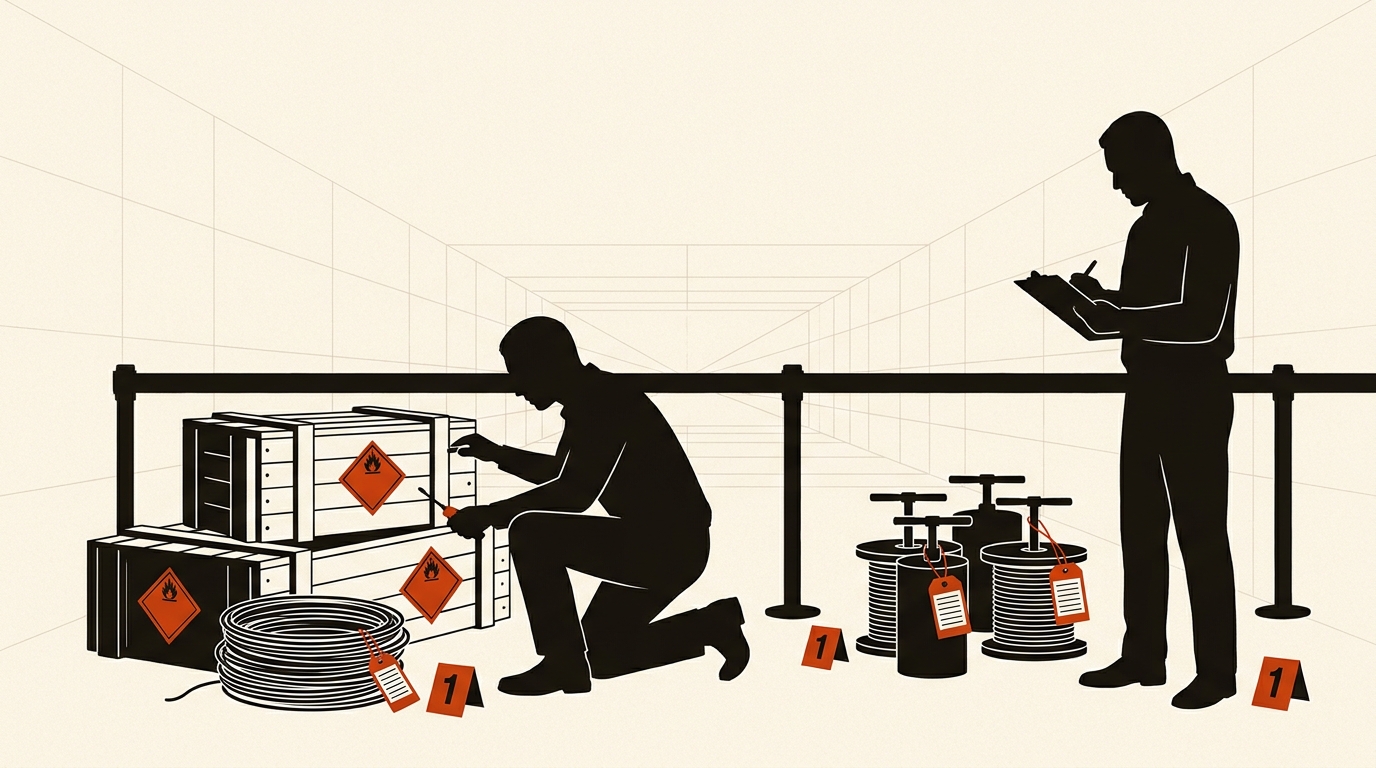
Distinguishing between illicit quarrying cartels, contractor negligence, and terror threats is crucial for genuine explosive supply-chain regulation.
Short answer: Whenever police haul truckloads of commercial blasting gelatin or ammonium nitrate from a warehouse, social media instantly declares a averted nationwide terror conspiracy. But investigative files tell a far more complex story. Across 2026, India recorded five high-profile explosive recoveries that triggered federal interventions, political mudslinging, and corporate cover-ups. While terror alerts justified the involvement of the National Investigation Agency in multiple states, the root cause in almost every case was an aggressive, unregulated black market feeding illegal stone quarrying, mining syndicates, and cut-throat real estate developers.
Here is the data, the timeline, and the forensic facts behind the five most controversial explosive seizures of 2026.
1. Malappuram, Kerala: 89,600 gelatin sticks and tampered barcodes (February 7)
The year’s largest recovery occurred in northern Kerala. On February 7, 2026, state police acting on intelligence raided an isolated storage depot in Malappuram district. Officers uncovered 89,600 commercial gelatin sticks packed into hundreds of corrugated boxes, alongside 10,500 electric detonators.
The sheer volume sent shockwaves through state and central intelligence units. What transformed the case into a major federal controversy was the discovery that manufacturer barcode labels had been systematically scratched off or chemically erased.
Under the Explosives Rules, every legal cartridge carries a unique barcode linking it to the manufacturing plant, the authorized distributor, and the licensed quarry operator. Scrubbing these labels pointed directly to an organized cross-state smuggling ring designed to hide the origin of the material.
The Ministry of Home Affairs stepped in, directing the National Investigation Agency (NIA) to take over the investigation. Within weeks, federal investigators made ten arrests and traced the supply route back to a licensed commercial explosives dealer located in Talikoti, in northern Karnataka. The Karnataka dealer had allegedly diverted massive quotas intended for local limestone quarries into black-market transport trucks heading south. When key suspects applied for anticipatory bail, state high court judges denied relief, citing the grave threat posed by deliberate barcode tampering.
2. Nagaur, Rajasthan: 9,550 kg of ammonium nitrate on Republic Day eve (January 24 to 26)
Two weeks before the Kerala raid, police in Rajasthan intercepted a massive chemical cargo during peak security preparations for Republic Day. Between January 24 and January 26, 2026, highway patrols in Nagaur district intercepted trucks carrying 9,550 kilograms of technical-grade ammonium nitrate along with more than 1,250 detonators.
The timing could not have been more sensitive. With nationwide 26/26 security alerts active and intelligence bureaus tracking potential festival targets, the joint involvement of the Intelligence Bureau (IB) and the NIA was immediate.
However, forensic supply-chain audits revealed an astonishing administrative loophole rather than an international terror cell. Investigators found that one of the primary regional suppliers was a former private hospital nursing staff member. The individual had legitimately held an explosive handling license years earlier, had formally surrendered that license two years prior, but had maintained his supplier network and continued buying bulk shipments of industrial oxidizers without regulatory flags. The case exposed how poorly state licensing portals cross-check surrendered permits against active freight distribution.
3. Birbhum (Nalhati), West Bengal: Pre-poll seizure triggers NIA takeover (February 14)
On February 14, 2026, special task force units in West Bengal raided multiple properties around Nalhati, an area known for stone-crushing units in Birbhum district. Officers recovered dozens of crates of gelatin sticks and sacks of ammonium nitrate, though authorities withheld the exact final kilogram count while forensic counting proceeded.
The controversy here was intensely political. West Bengal was entering the final campaign window for state legislative assembly elections. The discovery of uninventoried blasting materials in a politically volatile district prompted opposition leaders to allege that ruling party cadres were stockpiling crude bombs to intimidate rural voters.
Ruling party spokespersons fired back, arguing that illegal stone quarries in the Chhota Nagpur border zone had operated with illicit blasting caps for decades under local contractor cartels. Given the heightened political friction, the Ministry of Home Affairs ordered an immediate NIA probe under the Unlawful Activities Prevention Act (UAPA). Similar to our analysis of judicial standards in state prosecution and UAPA procedures, shifting a localized quarry violation into a federal anti-terror mandate instantly elevated the incident into national headlines.
4. Bengaluru (Bhoganahalli), Karnataka: The corporate whistleblower who defied developers (August 16)
While most seizures occur in rural mining belts, the August 16, 2026 bust happened right in the middle of India’s technology capital. Local police raided a 25-acre prime construction plot in Bhoganahalli, outer east Bengaluru, seizing more than 800 kilograms of commercial gelatin sticks.
What made this case unprecedented was how police discovered the cache. This was not an intelligence sweep. It was an internal corporate whistleblower leak.
A young site civil engineer employed on the mega-project filed a direct formal complaint with the police and regulatory authorities. The engineer alleged that senior managers at Adarsh Developers ordered site personnel to conduct high-intensity foundation blasting to shatter granite bedrock quickly, completely bypassing municipal permits and licensed explosive handling protocols. Rather than hire licensed blasting contractors with controlled safety mats, the company allegedly procured unlicensed commercial gelatin sticks off the gray market to cut development deadlines.
The whistleblower’s courage sparked widespread civic protests across residential tech corridors, showing that the consumer appetite for explosives is driven just as much by urban real estate deadlines as by rural limestone quarries. Similar to the corporate and administrative accountability questions raised in our reporting on forest clearances and major industrial power projects, the Bengaluru raid highlighted how major developers cut safety corners when land values skyrocket.
5. Chitrakoot (Markundi), Uttar Pradesh: Local panchayat politics meets illegal quarrying (November 3)
The most recent controversy unfolded in the rugged Bundelkhand border region on November 3, 2026. Special operations teams in Markundi, Chitrakoot district, intercepted a vehicle carrying 199 kilograms of gelatin sticks, 100 industrial fuses, and 2.9 kilograms of loose explosive powder.
The political fallout was immediate. Police named and arrested Hari Gopal Mishra, widely known locally as Bablu Mishra. Mishra was a prominent local figure who had contested elections as a Bharatiya Janata Party (BJP) backed candidate for the Zila Panchayat.
Opposition parties immediately seized on the arrest, staging protests in Lucknow and alleging that ruling party figures were running armed syndicates with state protection. Police investigators, however, found no evidence connecting the political party or electoral campaigns to the seized haul. Instead, records showed Mishra had deep financial interests in regional sandstone quarries across the Uttar Pradesh and Madhya Pradesh border, where obtaining legal blasting quotas requires months of environmental clearances. By buying black-market explosives from unlicensed suppliers in neighboring districts, local quarry operators kept their stone crushers running around the clock.
Similar to our investigations into institutional oversight and electoral integrity procedures, the Chitrakoot incident demonstrated how local political clout is frequently leveraged to shield profitable, illegal resource extraction.
6. What connects these cases: The breakdown of explosive traceability
When viewed together, these five incidents point to a single systemic crisis: India’s commercial explosive tracking framework is riddled with human and digital gaps.
In theory, the Petroleum and Explosives Safety Organisation (PESO) regulates every stick of dynamite from cradle to grave. In reality, four structural failures allow hundreds of tons of explosives to leak into the gray market every year:
- Barcode Removal: As demonstrated in Malappuram, black-market distributors scrape off factory identification numbers, rendering digital supply logs useless once trucks hit the road.
- Quarry Diversion: Licensed quarry operators routinely order three times more explosive material than their permitted excavation volume, selling the surplus to unlicensed contractors for cash.
- Dead License Exploitation: As exposed in Nagaur, individuals whose explosive licenses were cancelled or surrendered years ago continue to purchase commercial oxidizers because wholesale databases lack real-time revocation flags.
- Corporate Cost-Cutting: As revealed by the Bengaluru whistleblower, high urban real estate land costs incentivize developers to use cheap, unlicensed blasting rather than waiting months for controlled municipal permits.
Until federal regulators enforce digital batch verification with tamper-proof micro-taggants, police will continue seizing truckloads of explosives, and viral rumors will continue mistaking commercial quarry greed for national security conspiracies.
Sources to check yourself
- National Investigation Agency (NIA): Official case registers and charge sheets for the Malappuram (RC-02/2026/NIA/KOC) and Birbhum investigations.
- Petroleum and Explosives Safety Organisation (PESO): Public compliance manuals and statutory requirements under the Explosives Rules, 2008.
- Karnataka State Police Crime Records Bureau: First Information Report details on the Bhoganahalli site inspection and whistleblower petition.
- Uttar Pradesh Police Directorate: Press statement on the Markundi explosive recovery and stone quarrying enforcement in Bundelkhand.
Frequently asked questions
Q: Are gelatin sticks the same as military-grade dynamite? A: No. Gelatin sticks are commercial blasting agents composed of nitroglycerin or nitrocellulose mixed with wood pulp and sodium nitrate. They are designed for breaking rock in stone quarries, road construction, and well digging, though they can be lethal if misused.
Q: Why was the National Investigation Agency involved in quarry-related cases? A: Under the NIA Act, offenses under the Explosive Substances Act are scheduled offenses. When large volumes of explosives are discovered with tampered barcodes, interstate smuggling trails, or timing close to national events like Republic Day, the central government frequently invokes federal jurisdiction to rule out cross-border conspiracy.
Q: What happened to the whistleblower engineer in Bengaluru? A: The site engineer was provided formal police witness protection under local whistleblower provisions while the state labor and municipal departments initiated compliance proceedings against the developer.
Reader discussion
Conversation for this story opens with memberships. Until then: found an error? Report it — we correct visibly.