Umar Khalid: Human Rights Icon or Mastermind of the 2020 Delhi Riots?
Former JNU student Umar Khalid won the Martin Ennals Award from Tihar Jail. Here are the facts and claims behind his prolonged UAPA detention.
Verdict: missing context.
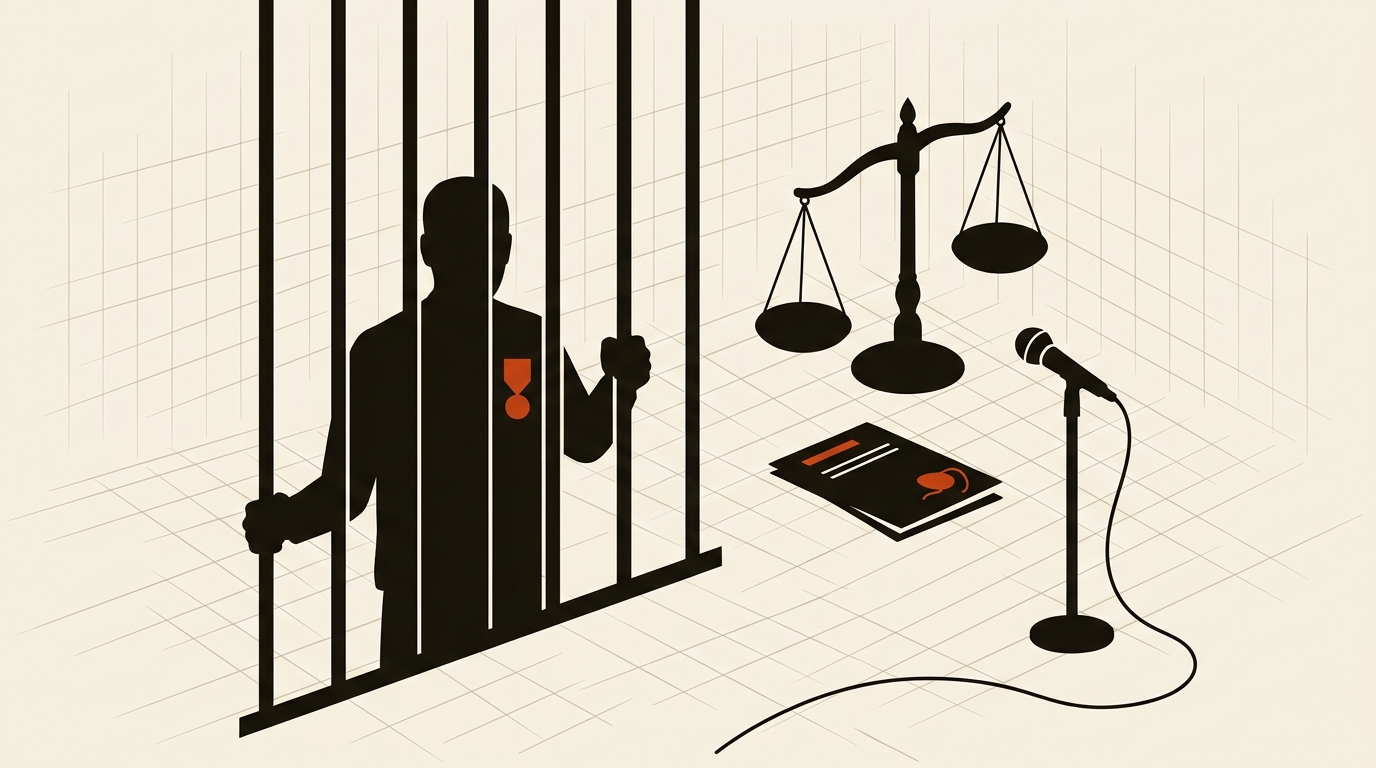
Four years of pre-trial detention under UAPA tests the boundaries of free speech, anti-terror statutes, and constitutional rights in India.
Short answer: Former Jawaharlal Nehru University student activist Umar Khalid has spent over four years in Tihar Jail under the Unlawful Activities Prevention Act without trial. While an international jury in Geneva selected him for the Martin Ennals Award for peaceful civil rights advocacy, Delhi Police maintain in a 17,000-page charge sheet that he orchestrated a pre-planned conspiracy behind the February 2020 North East Delhi riots. Courts have denied bail citing strict statutory rules under anti-terror laws, leaving key allegations unexamined in a completed trial.
1. What the viral post shows
International human rights bodies and domestic commentators have presented sharply contrasting portraits of Umar Khalid following his selection for the Martin Ennals Award. The Geneva-based foundation often referred to as the Nobel Prize for human rights cited Khalid’s peaceful advocacy for minority rights during protests against the Citizenship Amendment Act.
Global observers framed his recognition as validation of a prisoner of conscience punished for exercising constitutional dissent. Social media campaigns highlighted that Khalid has remained behind bars since his arrest in September 2020 without trial charges being formally framed.
Conversely, domestic law enforcement and government prosecutors present an entirely different narrative. Delhi Police charge sheets characterize Khalid not as an ideological dissenter, but as an active coordinator behind coordinated street disruption.
Prosecutors assert that Khalid used his public platform to incite sectarian tension during the official visit of then-United States President Donald Trump to New Delhi in February 2020. That communal violence across North East Delhi left 53 people dead and more than 700 injured according to official police records.
2. What the data actually says
The legal battle surrounding Khalid centers on Delhi Police FIR 59 of 2020, investigated by the Special Cell. An examination of court records, witness depositions, and judicial orders reveals the specific evidence and legal hurdles at play.
The prosecution’s case relies on three primary pillars:
- The Amravati address: On February 17, 2020, Khalid delivered a public speech in Amravati, Maharashtra. Prosecutors argue that his call for citizens to take to the streets during the Trump visit was designed to paralyze governance and draw hostile international scrutiny to India.
- Logistical coordination groups: Police submitted chat logs from messaging forums, including the Delhi Protests Support Group. Investigators alleged these channels served as command hubs to organize roadblock blockades (chakka jams), arrange protest logistics, and mobilize crowds.
- Protected witness testimony: The Special Cell introduced statements from multiple anonymous witnesses who alleged secret conspiratorial meetings took place in Seelampur and Chand Bagh ahead of the outbreak of street clashes.
Khalid’s defense counsel presented direct counterarguments documented in High Court hearings:
- Physical absence: Official travel records and mobile tower data confirm Khalid was not present in Delhi when riots erupted between February 23 and February 26, 2020.
- Full speech context: Counsel submitted the unedited video transcript of the Amravati speech. The full text showed Khalid explicitly calling for non-violent civil resistance (satyagraha), stating that the response to hate must be love rather than violence.
- Circumstantial digital evidence: Defense attorneys pointed out that across hundreds of messages recovered from protest planning groups, Khalid sent zero messages calling for violence, weapons procurement, or sectarian attacks.
Despite these defense arguments, the Delhi High Court rejected Khalid’s bail plea in October 2022. The court observed that under Section 43D(5) of the UAPA, bail must be denied if allegations appear prima facie true based on prosecution case files alone.
3. What’s missing / the footnote
The central context often overlooked in public debate is the mechanical structure of pre-trial incarceration under anti-terror statutes. Under regular Indian criminal procedure, bail is the rule and jail is the exception. Under UAPA, Section 43D(5) reverses that presumption by requiring courts to treat prosecution materials as accurate without cross-examining witnesses.
This procedural threshold creates an extended holding pattern. In Khalid’s case, four years have passed without the trial court commencing formal witness cross-examination, reflecting patterns seen in other complex Delhi protest crackdowns.
Meanwhile, international accolades like the Martin Ennals Award evaluate personal advocacy principles, whereas Indian criminal courts operate under statutory statutory restrictions. Public debates framing the issue purely as human rights sainthood versus terror conspiracy ignore that both narratives remain legally untested in open court cross-examination, much like other high-profile political speech disputes and court warrant battles.
Until the trial court evaluates witness credibility and tests the prosecution’s circumstantial digital links, Khalid remains in legal limbo between international acclaim and domestic detention.
Sources to check yourself
- Delhi High Court: Bail judgment records in Umar Khalid v. State (NCT of Delhi), CRL.A. 282/2022.
- Martin Ennals Foundation: Official 2024 Award Nominees and Laureates Citation, Geneva.
- Delhi Police Special Cell: FIR 59/2020 Charge Sheet and status filings presented before Karkardooma Courts.
Frequently asked questions
Q: Has Umar Khalid been convicted of rioting or conspiracy?
A: No. Umar Khalid has not been convicted of any crime. He has been held in pre-trial detention in Tihar Jail since September 2020 while charges are litigated.
Q: What is the Martin Ennals Award?
A: The Martin Ennals Award is an international human rights honor created in Geneva in 1993. It is decided by a jury of ten leading global human rights organizations to honor individuals demonstrating non-violent defense of human rights under personal risk.
Q: Why have courts denied bail if trial has not started?
A: Section 43D(5) of the Unlawful Activities Prevention Act bars bail if the court finds prima facie reasonable grounds to believe the accusations are true. This standard relies on the police charge sheet before full trial evidence can be cross-examined.
Reader discussion
Conversation for this story opens with memberships. Until then: found an error? Report it — we correct visibly.