5 Reasons Why Trump Should Resign: Inside the 'Vance Reset' Theory
Following a brutal 2026 midterm defeat, legal scholars and party strategists debate 5 compelling reasons why Donald Trump should step down for JD Vance.
Verdict: false alarm.
Primary source: Washburn University School of Law and JURIST Legal News Commentary by Professor L. Ali Khan →
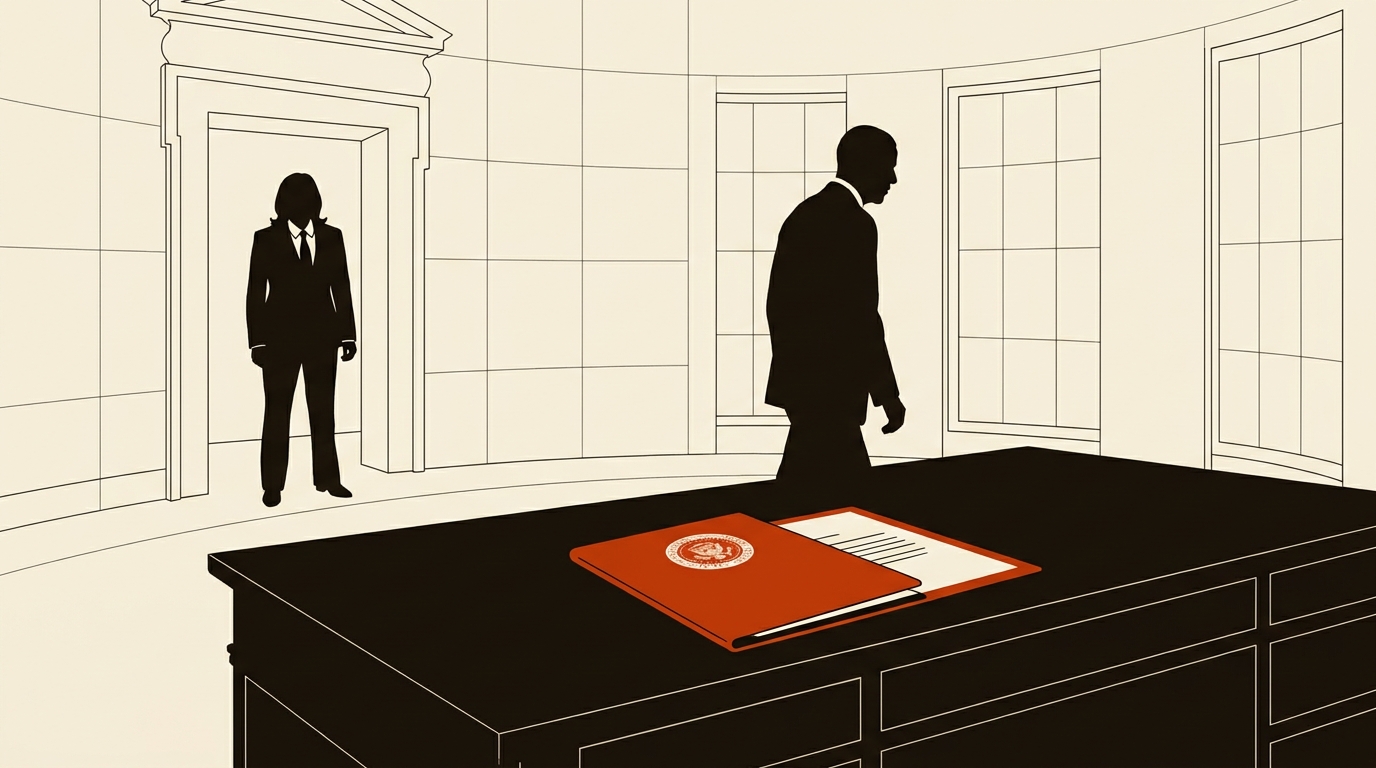
The commentary outlines the constitutional mechanics of the 25th Amendment and reveals how a divided government could incentivize an unprecedented presidential succession.
Short answer: Donald Trump is under no constitutional duty to step down after his party lost control of Capitol Hill. In American history, only Richard Nixon has ever resigned the presidency, and past presidents routinely completed their four-year terms after midterm defeats. However, an explosive legal commentary published by constitutional scholar L. Ali Khan has set Washington abuzz with a radical political argument. The proposal outlines five compelling strategic reasons why stepping aside in favor of Vice President JD Vance could offer Republicans their only viable path to resolve the Iran war, shield associates from subpoenas, and win the 2028 presidential election.
1. Escaping complete legislative paralysis in a divided government
The 2026 midterm elections delivered a devastating political blow to the White House. Voters across the country rebuked the administration’s record, handing Democrats outright control of both the House of Representatives and the Senate.
For Donald Trump, this marks completely uncharted political territory:
- The loss of unified power: For the past two years, Trump governed with a single-party government. Republicans held the White House, the House majority, and the Senate leadership. That concentration of authority allowed the administration to push through executive appointments, aggressive tariff schedules, and sweeping immigration actions without meaningful legislative resistance.
- A full legislative blockade: In his first term, Trump lost the House in 2018 but maintained a protective firewall in the Senate. In 2027, both chambers will fall under opposition control. Every major bill, budget authorization, and judicial nomination will require Democratic agreement.
- The paralysis of the veto: While a president can veto bills passed by an opposing Congress, the veto is an instrument of obstruction, not governance. Relying constantly on vetoes inevitably produces government shutdowns, budget lapses, and institutional deadlock.
Stepping aside would allow a successor to reset relations with Capitol Hill before government operations grind to a complete halt.
2. Shielding family members and associates through preemptive pardons
The second argument forms the core of the spicy theory circulating behind closed doors in Washington.
While the Supreme Court granted former presidents sweeping criminal immunity for official acts, that legal shield does not apply to cabinet officials, personal friends, or family members. When Democrats take control of congressional committees in January 2027, they will unleash aggressive subpoenas and criminal referrals. Investigators plan to scrutinize backchannel peace missions, private business dealings, and controversial domestic directives.
- The limits of presidential immunity: Donald Trump cannot be prosecuted for core constitutional acts. However, his children, aides, and business partners enjoy zero immunity from federal grand juries.
- The 25th Amendment mechanism: If Trump resigns, Vice President JD Vance immediately assumes the presidency under Section 1 of the 25th Amendment.
- Unreviewable pardon power: As president, Vance possesses unilateral constitutional pardon authority. Vance could issue full preemptive pardons to Trump’s inner circle, permanently shutting down federal prosecution threats before investigators can even swear in witnesses.
This pardon shield represents an immense personal incentive that could persuade an embattled leader to consider an orderly exit.
3. Ending the Iran war and reopening the global economy
The third reason centers on the Middle Eastern conflict that has battered American consumers. The ongoing war with Iran, initiated in February 2026, became the primary anchor that sank Republican candidates in the midterms.
The economic fallout has been catastrophic:
- Disrupted shipping: Repeated closures of the Strait of Hormuz sent global maritime insurance rates skyrocketing, disrupted international trade, and drove domestic energy and grocery prices to painful highs.
- The trust deficit: Tehran harbors intense personal mistrust toward Donald Trump. Iranian leaders view him as having breached good faith during earlier diplomatic rounds. Meaningful negotiations will remain deadlocked as long as Trump occupies the Oval Office.
- The Vance diplomatic channel: In contrast, JD Vance has established backchannel credibility. In June 2026, Vance personally led the American delegation that negotiated the Islamabad Memorandum of Understanding with Iranian intermediaries. While that preliminary pact collapsed, Vance has publicly acknowledged that the Iran war has become an unsustainable political liability.
- Securing peace: As president, Vance could finalize an honorable diplomatic peace, reopen the Persian Gulf shipping lanes, crash energy prices, and immediately tame domestic inflation.
4. Sparing the country from paralyzing congressional investigations
The fourth reason addresses the toll of perpetual political warfare on the American public.
Having won a decisive midterm mandate, emboldened Democratic lawmakers are determined to hold the administration accountable for its most contentious policies:
- The cost of investigations: Congressional probes, special committees, and public hearings consume immense taxpayer resources and divert legislative attention from economic relief, infrastructure, and healthcare.
- The inevitability of impeachment: A Democratic House is widely expected to initiate impeachment proceedings against Trump shortly after taking power in January 2027. Impeachment trials in the Senate monopolize the national agenda and deepen partisan exhaustion.
- A clean slate for governance: If Trump steps down, Congress would lose its primary political target. While lawmakers might still examine past policies, the urgency of removing a sitting president evaporates. Lawmakers could redirect their energies toward productive bipartisan compromises.
Similar legal questions over statutory authority and institutional limits have frequently reached the courts, as seen when judges dismissed multimillion-dollar legal challenges with prejudice while requiring strict factual proof.
5. Saving the Republican Party and holding the White House in 2028
The fifth and final reason is purely strategic electoral self-preservation for the Republican Party.
If Trump remains in power for the next two years, the political outlook for conservatives is bleak:
- The lame-duck trap: An embattled president locked in trench warfare with Congress would enter 2028 deeply damaged by constant scandals, veto fights, and economic stagnation. That weakness could drag down Republican candidates in critical swing states.
- The Vance brand reset: Handing the presidency to Vance would execute an immediate generational transition. Unlike Trump, Vance served as an elected senator and understands the institutional culture of the legislative branch.
- Incumbency advantage in 2028: A Vance administration could demonstrate effective, pragmatic governance, shed controversial policy baggage, and enter the 2028 presidential election with the formidable advantages of executive incumbency.
Evaluating parliamentary majorities and institutional thresholds remains crucial across global democracies, paralleling debates surrounding legislative seat distribution and statutory boundaries.
The constitutional counterpoint: Why Trump has no obligation to leave
Despite the compelling arguments raised by legal scholars, the constitutional reality remains clear. The United States Constitution does not require a president to resign following midterm losses:
- Fixed executive tenure: In more than two centuries of American history, only Richard Nixon has ever resigned. Presidents from Bill Clinton to Barack Obama endured devastating midterm defeats and continued governing until their terms concluded.
- Senate trial math: Even if the House votes to impeach Trump, conviction and removal requires a two-thirds supermajority in the Senate. Democrats do not possess the votes needed to forcefully remove him.
- Trump’s personal resolve: Donald Trump has spent his entire career projecting defiance. Voluntarily surrendering executive power contradicts every political instinct he possesses.
Constitutional scrutiny will always check executive maneuvers, reflecting standard judicial tests established during Supreme Court hearings on institutional authority.
Whether Donald Trump chooses to fight through the final two years or considers an unprecedented strategic exit, the 2026 midterms have fundamentally rewritten American politics. Washington now braces for a historic standoff where every presidential move will be contested under the watchful eye of an empowered opposition Congress.
Sources to check yourself
- JURIST Legal News and Commentary: Read Professor L. Ali Khan’s complete analytical commentary on executive power.
- Associated Press Congressional Desk: Review comprehensive midterm election results and legislative seat breakdowns.
- Reuters World News: Follow diplomatic developments regarding Persian Gulf shipping routes and Middle Eastern conflict mediation.
- U.S. National Archives Constitution Portal: Examine historical records regarding the 25th Amendment and presidential succession precedents.
Frequently asked questions
Q: Does Donald Trump have to resign after losing the midterm elections? A: No. The U.S. Constitution provides a fixed four-year term for the presidency. Presidents frequently complete their terms after their party loses control of Congress during midterm votes.
Q: What are the 5 main reasons proposed for Trump to resign? A: The proposal outlines five reasons: escaping total legislative deadlock, shielding associates through presidential pardons, allowing JD Vance to negotiate an end to the Iran war, sparing the country from impeachment battles, and resetting the Republican brand for the 2028 election.
Q: What is the spicy Vance Reset theory? A: The theory proposes that Donald Trump voluntarily resign so JD Vance can become president, use the pardon power to protect Trump’s associates, negotiate an end to the Iran war, and reset the Republican brand for the 2028 election.
Q: How would JD Vance become president if Trump resigned? A: Under Section 1 of the 25th Amendment to the U.S. Constitution, if the president resigns, the vice president immediately becomes the president.
Q: Has any American president ever resigned due to midterm election losses? A: No. In United States history, the only president who ever resigned was Richard Nixon in 1974, following the Watergate scandal and impending removal through impeachment.
Reader discussion
Conversation for this story opens with memberships. Until then: found an error? Report it — we correct visibly.