Stop Dumping Pooja Samagri in Rivers: Eco-Friendly Ways to Upcycle at Home
Tossing sacred nirmalya and altar materials into rivers chokes aquatic ecosystems; here is how to respectfully compost and upcycle pooja samagri at home.
Verdict: false alarm.
Primary source: Central Pollution Control Board (CPCB) river water quality assessments and National Mission for Clean Ganga (NMCG) guidelines →
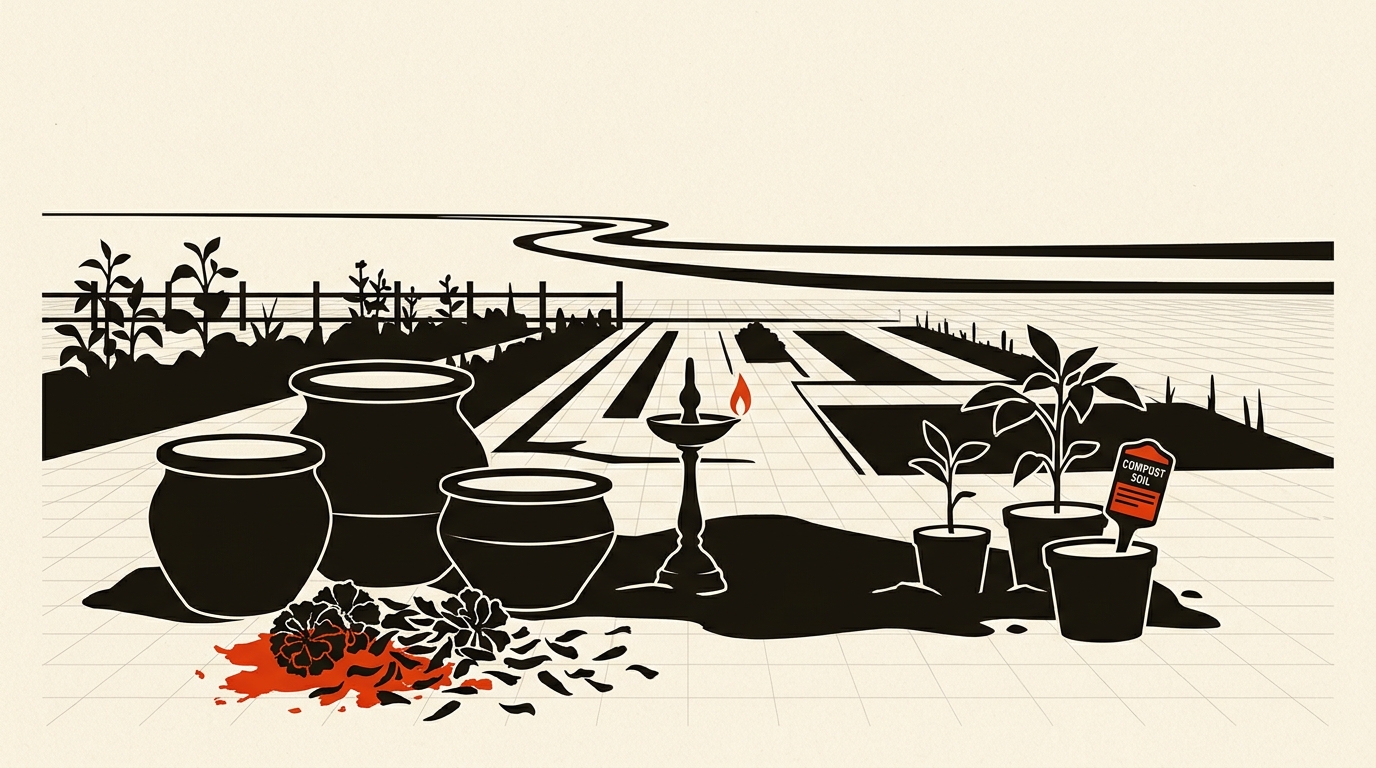
Every year, thousands of tons of pesticide-treated flowers, synthetic dyes, and plastic threads choke Indian rivers under the mistaken belief that disposal requires running water.
Short answer: Devotion does not require polluting sacred rivers. Every morning across India, tons of wilted temple flowers (nirmalya), sacred threads, altar cloth, and havan ash are tossed into rivers under the devout intention of avoiding disrespect to sacred objects. But environmental testing confirms this habit introduces concentrated pesticides, synthetic dyes, and non-biodegradable microplastics directly into municipal drinking water sources. Ancient philosophy venerates rivers as living mothers, making river dumping a contradiction that modern households can resolve by upcycling every sacred item at home.
Here is what river water quality data reveals about religious organic waste, and how every family can easily convert their daily worship materials into chemical-free garden fertilizer, natural incense, and zero-waste household items.
1. What really happens when floral offerings hit the river
The ritual tradition of immersing sacred items in flowing water originates from a pre-industrial era when offerings were purely organic, pesticide-free, and limited in scale. Today, commercial floriculture relies heavily on chemical insecticides, artificial color sprays, and synthetic preservatives to keep garlands fresh during transit.
When thousands of citizens discard floral garlands into rivers like the Ganga, Yamuna, Godavari, or Cauvery, scientific audits conducted by the Central Pollution Control Board (CPCB) and IIT Kanpur document severe aquatic damage:
- Biological Oxygen Demand (BOD) Spikes: As organic flower petals decompose in stagnant river bends, microbial digestion consumes dissolved oxygen. Dissolved oxygen levels drop sharply below 4 milligrams per liter, suffocating native fish species and riverbed organisms.
- Pesticide Runoff: Commercial marigolds, roses, and chrysanthemums leach organophosphates and chemical preservatives into surface water, complicating filtration for municipal drinking supplies.
- The Plastic Trap: Garlands are almost never purely floral. They contain nylon binding threads, plastic zip tags, aluminum foil decorations, and polybag containers. These non-biodegradable components wrap around river stones, creating persistent underwater debris dams.
Similar to the public health crises examined during our investigation into severe post-Diwali particulate air pollution spikes and seasonal emissions convergence across northern India, environmental destruction often occurs through routine, unexamined civic habits.
2. Organic flower waste (Nirmalya): Turn devotion into rich soil
Wilted flowers do not belong in public rivers. Because they carry natural plant biomass, they can be transformed back into rich soil within your own home:
Method 1: Simple Domestic Flower Composting
Dedicate an earthenware clay pot (matka) or ventilated plastic bucket on your balcony or terrace. Each day, collect your wilted puja flowers after gently removing any plastic threads, foil ribbons, or synthetic strings. Mix the petals with dry brown leaves, shredded scrap paper, or cocopeat to maintain a balanced carbon-to-nitrogen ratio. Within six to eight weeks, microbial breakdown converts the holy floral waste into dark, nutrient-rich compost that feeds your potted household plants.
Method 2: Homemade Organic Incense Cones (Dhoop)
Sun-dry marigold and rose petals on a tray until they turn completely crisp. Grind the dried petals into a fine powder using a domestic mixer. Mix the floral powder with a small pinch of natural camphor powder and a spoonful of cow dung powder or pure desi ghee to form a workable dough. Roll the mixture into conical shapes and allow them to cure in the sun for two days. When lit, these homemade dhoop cones burn cleanly without synthetic chemical fragrances.
Method 3: Fragrant Household Floral Water
Fresh, chemical-free rose or jasmine petals from your morning altar can be simmered in clean water for fifteen minutes. Once cooled and strained through a fine cloth, the liquid acts as an all-natural, pleasant-smelling surface rinse for domestic altars and wooden furniture, eliminating the need for commercial aerosol sprays.
3. Sacred cloth, threads, and coconut shells: Zero-waste repurposing
Altar waste extends beyond flower petals. Everyday rituals generate fabrics, sacred threads, and protective shell casings that often end up floating along riverbanks wrapped in polybags:
Sacred Cloth and Chunris
Bright red chunris, altar drapery, and cotton fabrics offered to deities are traditionally kept forever or immersed in water. Instead of discarding them, wash clean fabrics thoroughly. They make durable, respectful protective liners for wooden puja drawers, wrapping fabric for brass and copper deities during travel, or covers for sacred scriptures and prayer books.
Sacred Wrist Threads (Kalava) and Cotton Wicks
Used kalava wrist cords and clean un-dyed altar fabrics can be carefully untwisted and shredded into pure cotton fibers. These fibers can be re-rolled by hand into long-burning cotton battis for daily diya lamps, ensuring that ritual offerings complete a full closed cycle within the home.
Coconut Shells (Nariyal Katori)
The hard outer shells left over from broken puja coconuts are completely biodegradable yet remarkably durable. When inverted, they function as attractive natural planters for indoor succulents and small herbs. Alternatively, dry coconut husks can be used as clean-burning charcoal bases for natural sambrani dhoop during evening prayers.
4. Havan ash and idols: Moving toward permanent reusability
The final categories of worship waste involve ritual ash, camphor soot, and festive idols:
Havan and Diya Ash (Bhasma)
Wood ash produced during home havans and camphor burners is packed with potassium, calcium carbonate, and essential micronutrients. Instead of throwing ash into drains or rivers:
- Sprinkle a teaspoon of cooled wood ash around garden soil to serve as an organic insect repellent and mineral booster.
- Mix fine ash with a few drops of lemon juice to gently scrub and polish traditional brass and copper puja vessels without chemical cleansers.
The Shift Away From Single-Use Plaster Idols
Purchasing cheap plaster of Paris (PoP) idols that require public immersion creates massive river contamination, as toxic chemical pigments and insoluble gypsum leach into water bodies.
Modern households are increasingly shifting to two sustainable alternatives:
- Permanent Brass and Stone: Investing in permanent brass, bronze, or marble deities that remain on the home altar permanently, eliminating the need for annual replacement.
- Bucket Immersion for Raw Clay: If using temporary festival idols, select unpainted natural clay (kacha mitti). Perform the symbolic immersion ritual at home inside a large bucket of water. Within hours, the clay dissolves completely, allowing the purified mud and water to be poured directly onto home garden plants and tree roots.
Similar to our analysis of municipal conservation and water stress in regional drinking water distribution across urban hubs and urban dust mitigation frameworks, protecting freshwater sources requires transforming abstract environmental rules into simple, daily civic routines.
Sources to check yourself
- Central Pollution Control Board (CPCB): Statutory guidelines for idol immersion and prevention of water quality deterioration in natural lakes and rivers.
- National Mission for Clean Ganga (NMCG): River water telemetry, ghat cleanliness protocols, and nirmalya recycling advisories.
- Indian Institute of Technology Kanpur (IIT-K): Department of Civil Engineering research papers on biochemical oxygen demand from floral temple waste.
- Indian Ministry of Environment, Forest and Climate Change: Solid Waste Management Rules governing biodegradable and religious organic processing.
Frequently asked questions
Q: Is it considered disrespectful or inauspicious to compost puja flowers at home? A: No. In Vedic and Hindu philosophy, the five great elements (Pancha Bhoota) teach that all living matter originates from the earth and returns to the earth. Composting sacred flowers into living soil honors the divine cycle far more respectfully than dumping pesticide-treated garlands into contaminated river drains.
Q: Can havan ash be added directly to any household potted plant? A: Yes, but in moderation. Havan wood ash is alkaline and rich in potassium. A light dusting around the soil once a month acts as a natural soil conditioner, but excessive quantities can raise soil pH too high for acid-loving plants.
Q: How do you dissolve clay idols at home without clogging drains? A: Place the unpainted clay idol in a large clean bucket of water on your balcony or patio. Within 12 to 24 hours, the raw clay breaks down into smooth silt. Stir the mixture and pour the rich mud directly into outdoor garden beds, planters, or tree bases.
Reader discussion
Conversation for this story opens with memberships. Until then: found an error? Report it — we correct visibly.