Mumbai Rank #1 in India AQI: How Construction Chaos Broke Mumbai's Sea Shield
Mumbai overtook Delhi on global air quality indexes as unbridled construction dust, diesel exhaust, and stagnant coastal winds shattered its sea breeze shield.
Verdict: true, with context.
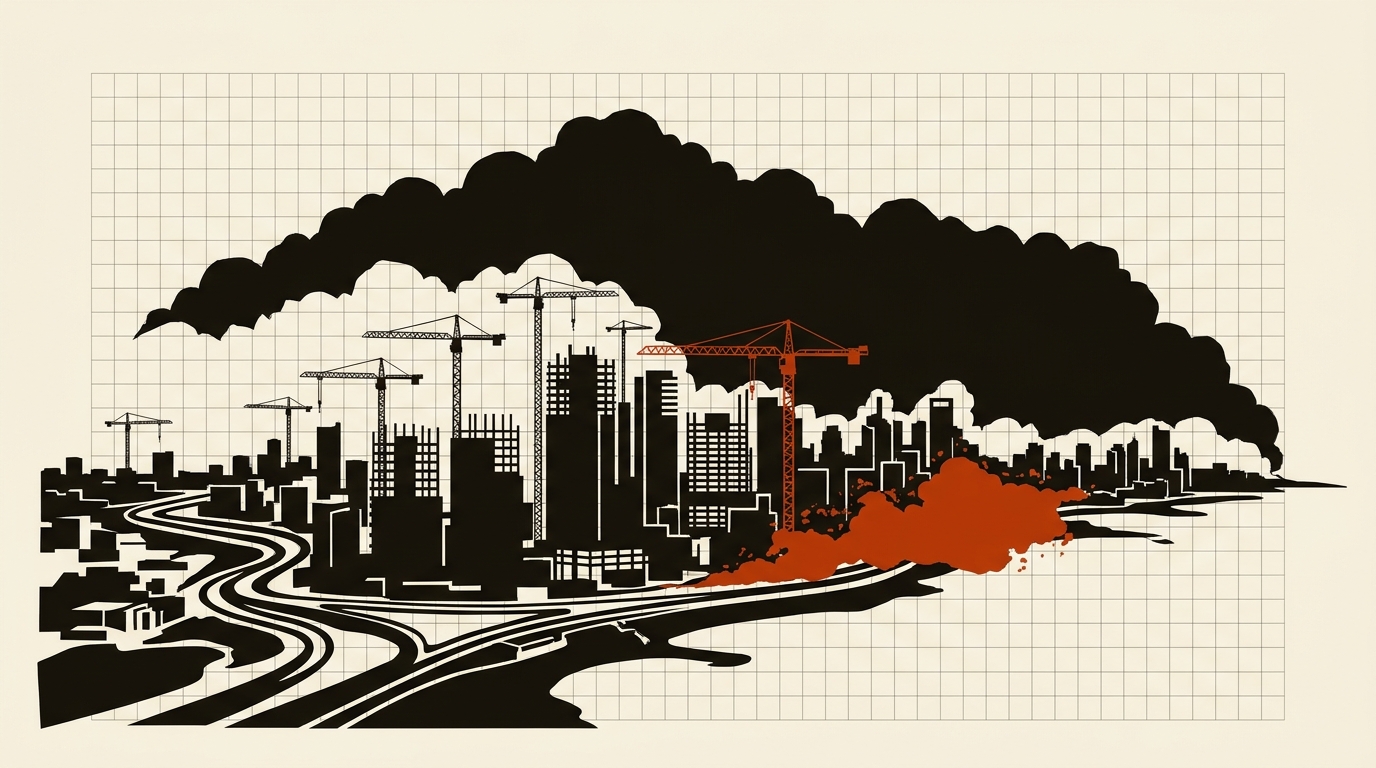
For decades, Mumbai relied on coastal winds to disperse emissions. Loss of this sea shield combined with unmonitored building dust creates an urgent public health hazard.
Short answer: The ranking is accurate for multiple peak recording periods this season. Global monitoring trackers like IQAir and CPCB monitoring stations showed Mumbai recording higher Air Quality Index (AQI) values than Delhi. A combination of simultaneous mega-construction projects, unwashed roads, and unusual meteorological stagnation broke the coastal city’s natural sea breeze defense.
1. How Mumbai lost its coastal wind advantage
For generations, Mumbai residents took clean ocean air for granted. Landlocked Delhi suffered choking winter inversions every November, while Mumbai relied on the clockwork dynamics of the Arabian Sea. Cool breezes swept inland by afternoon, flushing vehicular exhaust and industrial smoke eastward toward the Western Ghats.
That protective buffer has collapsed. Morning walkers along Marine Drive and Worli Sea Face no longer see clear horizons. Instead, a dense brownish haze blankets high-rises and coastal expressways. On global platforms like IQAir, Mumbai surged past Delhi, Karachi, and Lahore to sit among the top five most polluted cities globally for multiple consecutive days.
AQI monitors in suburban neighborhoods like Bandra-Kurla Complex (BKC), Mazgaon, Chembur, and Malad clocked numbers over 280, crossing into the “Very Poor” bracket. Understanding these metrics requires looking at real sensor placement, a principle explained in our guide on how to read rankings. The numbers confirm what residents feel in their throats: coastal geography alone cannot neutralize unchecked ground emissions.
2. Unfiltered construction dust across the peninsula
The primary culprit behind the sudden spike is not stubble burning, but coarse mineral dust. Mumbai is undergoing the heaviest infrastructure overhaul in its history. Metro lines, coastal reclamation routes, elevated connectors, and thousands of private housing redevelopment projects are active at the same time.
Real estate sites dig massive foundation pits without mandatory 35-foot green fabric barriers. Dump trucks carry excavated debris without tarpaulin covers, leaving fine silt across traffic corridors. When thousands of vehicles run over this debris, it breaks down into respirable PM10 and PM2.5 particles.
State pollution control guidelines mandate continuous water misting and anti-smog guns on sites exceeding 20,000 square meters. On the ground, compliance remains sporadic. Small residential redevelopments operate with zero dust suppression. In dense localities like Dadar, Parel, and Andheri, residents report layers of dark soot settling on window sills within hours of cleaning.
3. The weather trap: Stagnant air and temperature inversion
Meteorological patterns multiplied the damage from localized dust. Weather models tracked the influence of altered atmospheric circulation across western India. As explored in our analysis of regional water rationing and drought patterns, shifting climate drivers have weakened typical seasonal wind currents.
Instead of brisk sea breezes cycling every 24 hours, coastal winds slowed to less than 5 kilometers per hour. Nighttime temperatures dropped just enough to create surface-level temperature inversions. Warm air aloft acted like a ceiling, trapping heavy construction particulate and diesel exhaust within 50 meters of street level.
Without wind to carry pollutants inland, emissions recirculated within the island city. Doctors across public hospitals and private clinics reported a 30 to 40 percent rise in acute bronchitis, asthma exacerbations, and persistent dry coughs among children and senior citizens.
4. Bombay High Court steps in: Emergency hearings and civic mandates
The sudden drop in air quality prompted swift judicial intervention. The Bombay High Court initiated suo motu proceedings, labeling the city’s toxic air an emergency that threatens the fundamental right to life.
The division bench pulled up the Brihanmumbai Municipal Corporation (BMC) and the Maharashtra Pollution Control Board (MPCB). Justices questioned how a coastal city surrounded on three sides by water could allow its atmosphere to match landlocked industrial zones. The court demanded strict timelines for road-washing schedules, sensor installations at construction perimeters, and stop-work notices for errant developers.
In response, civic authorities issued guidelines requiring developers to deploy metal barricades, water-sprinkling systems, and air quality sensors. However, urban planners note that rules without continuous enforcement staff cannot solve the crisis. Until civic bodies enforce dust suppression across thousands of dispersed building sites, Mumbai’s air will remain at the mercy of shifting winds.
Sources to check yourself
- Central Pollution Control Board: Official continuous ambient air quality bulletins and daily National AQI tracking records.
- The Indian Express: Investigative reporting on BMC dust-control enforcement, building site compliance, and developer penalties.
- The Hindu: Legal coverage of the Bombay High Court suo motu public interest litigation on Mumbai air pollution.
Frequently asked questions
Q: Did Mumbai really rank worse than Delhi for air pollution?
A: Yes. During several recording stretches in October, official stations and global platforms recorded Mumbai’s average AQI higher than Delhi’s daily readings due to concentrated particulate dust and stagnant coastal winds.
Q: What is the main cause of Mumbai’s high AQI?
A: Infrastructure construction dust and demolition debris represent the largest share of particulate matter, compounded by vehicle exhaust and weather-driven air stagnation.
Q: What measures has the Brihanmumbai Municipal Corporation announced?
A: The BMC issued mandatory dust mitigation guidelines, including 35-foot perimeter sheets, automated misting systems, covered debris transport, and routine mechanical sweeping of arterial roads.
Reader discussion
Conversation for this story opens with memberships. Until then: found an error? Report it — we correct visibly.