Plan for 850 Lok Sabha Seats: The Delimitation Bill Math and Voting Breakdown
The Constitution 131st Amendment Bill proposing 850 Lok Sabha seats failed with 298 votes for and 230 against. Here is the exact legislative arithmetic.
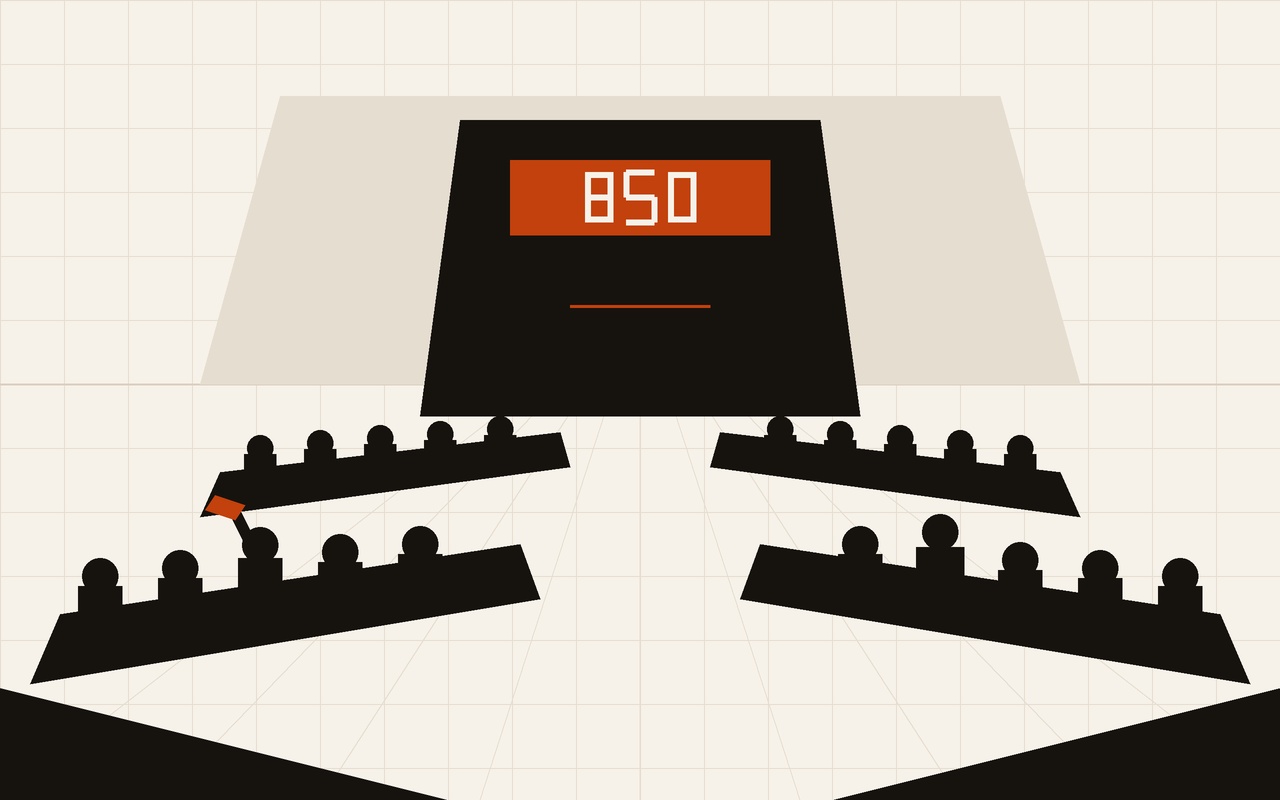
Redrawing parliamentary constituencies and expanding seats to 850 alters the federal balance of representation between North and South India.
Short answer: The central government’s proposal to expand the Lok Sabha from 543 to 850 seats remains stalled after falling 54 votes short of a constitutional two-thirds majority in April 2026. While the ruling coalition secured 298 votes, 230 opposition members voted against the measure. Regional parties from southern and northern states continue to demand either a renewed 25-year freeze, updated caste census data, or a uniform 50 percent seat increase across all states.
1. The legislative arithmetic: Why the 131st Amendment fell short
The push to expand parliamentary strength reached a formal vote on April 17, 2026, through the Constitution (131st Amendment) Bill, 2026. The bill proposed lifting the statutory cap on the Lok Sabha to 850 members. It also tied the rollout of 33 percent women’s reservation to the post-delimitation seat distribution before the 2029 general election.
Under Article 368 of the Constitution, passing an amendment requires a two-thirds majority of members present and voting. With 528 lawmakers casting ballots on April 17, the threshold for passage was 352 votes. The division tally ended at 298 votes in favor and 230 votes against. Falling 54 votes short of the required mark forced the government to drop the amendment.
Following that defeat, the government withdrew two companion statutory bills. One bill sought to conduct constituency delimitation using available 2011 census figures. The second bill proposed structural adjustments to representation rules for Union Territories. Parliament enacted the Nari Shakti Vandan Act in 2023, yet its statutory enforcement remains tied to new delimitation exercises. This linkage sparked intense debate over whether seat redistribution delays women’s representation, similar to earlier procedural gridlocks reviewed in our breakdown of public sector policy disputes.
2. Party by party: Where the opposition blocs stand
Opposition resistance stems from conflicting regional interests, state election calendars, and demographic representation fears.
The Congress party demands that 33 percent reservation for women apply immediately within the existing 543 seats. Party leaders cite previous 25-year seat freezes instituted during the tenures of Indira Gandhi and Atal Bihari Vajpayee. Congress argued that expanding seats based purely on raw population penalizes southern states that successfully implemented family planning. Leader of the Opposition Rahul Gandhi publicly termed the 850-seat plan an institutional disadvantage for states like Tamil Nadu.
The Samajwadi Party, commanding 37 Lok Sabha seats, rejected constituency boundary changes without updated caste and population census records. Party chief Akhilesh Yadav raised concerns that redrawing seat boundaries ahead of the upcoming Uttar Pradesh assembly elections could distort local representation balances.
In Tamil Nadu, the ruling DMK with 22 MPs voted against the April bill. The Tamil Nadu Legislative Assembly adopted a resolution on August 12 demanding the retention of the current 543-seat cap. The resolution insisted that women’s reservation proceed without being conditioned on boundary redistricting. Political alignments in Chennai grew complex following DMK’s recent domestic realignments, leaving both the treasury benches and the opposition vying for its support.
The Trinamool Congress (TMC) mobilized 21 of its 28 Lok Sabha lawmakers to vote against the amendment in April. Subsequent assembly elections triggered internal shifts, with 20 MPs breaking away from party leadership. Despite reduced operational strength, TMC chief Mamata Banerjee maintains an active public stance against the seat expansion.
Other regional groups hold distinct mathematical alternatives. The Nationalist Congress Party (Sharadchandra Pawar) suggested a uniform 50 percent increase in seats across every Indian state. NCP-SP leader Supriya Sule argued that proportional growth protects demographic balance while expanding representation. The Left bloc, holding eight seats across the CPI, CPI(M), and CPI(ML) Liberation, opposes any revision to the 543-seat cap. Shiv Sena (UBT) retains three opposing MPs, while 13 lawmakers belong to the rival faction supporting the government. These voting coalitions parallel shifting regional voting pacts analyzed during electoral dispute reporting.
3. The 64-day prorogation dispute and consultation records
Tensions escalated on October 16, 2026, when Congress President Mallikarjun Kharge wrote to Prime Minister Narendra Modi. Kharge requested a formal all-party conference prior to introducing any renewed delimitation legislation. He also questioned why the Monsoon Session had not been formally prorogued 64 days after adjourning sine die on August 13, 2026.
Parliamentary Affairs Minister Kiren Rijiju issued a formal response to Kharge on October 19, 2026. Rijiju rejected claims that the government bypassed opposition consultation. Ministry records cited formal letters dispatched to Congress leadership on March 16, March 26, and April 12, 2026. Rijiju stated that direct meetings with Kharge and Rahul Gandhi during the monsoon sitting yielded no agreed dates for discussions. The government confirmed holding bilateral consultations with the SP, DMK, YSRCP, NCP-SP, Shiv Sena (UBT), AIMIM, and BJD.
Addressing the prorogation query, Rijiju stated that the Constitution sets no fixed deadline between sine die adjournment and presidential prorogation. The ministry cited historical intervals between legislative sittings, including 76 days in 1987, 54 days in 1989, 49 days in 2006, 49 days in 2013, and 41 days in 1963. Rijiju also cited the 2008 parliamentary session, where the Lok Sabha met in July for a confidence vote, adjourned, and reconvened in October without prorogation. Understanding how legislative rules govern parliamentary timing requires reading beyond surface headlines, as outlined in our guide on how to read data breakdowns.
Sources to check yourself
- Lok Sabha Secretariat: Official division lists and voting tally for the Constitution (131st Amendment) Bill, April 17, 2026.
- Ministry of Parliamentary Affairs: Official correspondence between Kiren Rijiju and Mallikarjun Kharge, October 19, 2026.
- Constitution of India: Article 81 (Composition of the House of the People) and Article 368 (Power of Parliament to amend the Constitution).
Frequently asked questions
Q: Why did the bill fail if 298 members voted in favor? A: Under Article 368, constitutional amendments require a two-thirds majority of members present and voting. With 528 MPs voting, the passage threshold stood at 352 votes, leaving the 298 affirmative votes 54 short.
Q: Why do southern states object to delimitation based on population? A: Southern states reduced fertility rates through public health policies over the past five decades. Reallocating parliamentary seats strictly by current population would transfer seats to higher-growth northern states, reducing southern legislative leverage.
Q: What is the NCP-SP alternative proposal? A: The NCP (Sharadchandra Pawar) proposed increasing Lok Sabha seats by an equal 50 percent across all states. This formula expands parliament while preserving each state’s proportional weight.
Reader discussion
Conversation for this story opens with memberships. Until then: found an error? Report it — we correct visibly.