Spatial Intelligence Without Cameras: RuView Reaches Top Global GitHub Rankings
RuView repurposes commodity Wi-Fi radio waves for camera-free motion tracking and vital sign monitoring in Rust, topping 100,000 GitHub stars.
Verdict: true, with context.
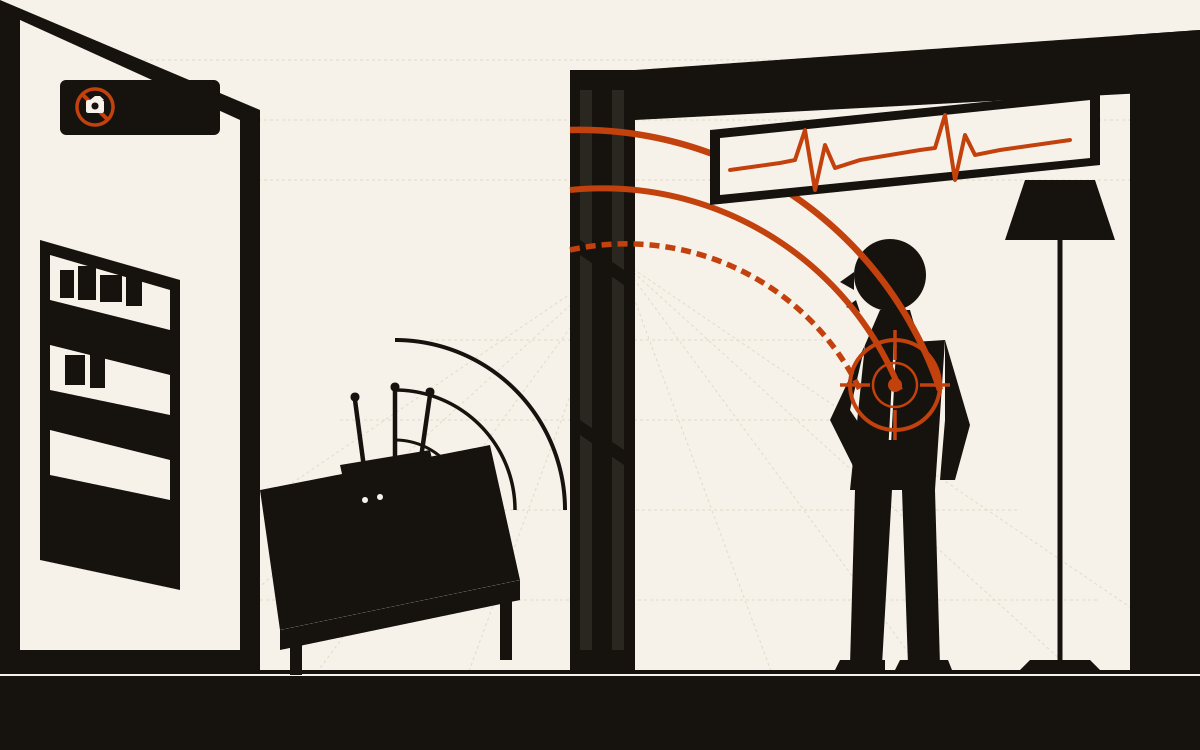
Optical cameras raise acute privacy issues in bedrooms, bathrooms, and eldercare rooms. Decoding Wi-Fi radio reflections locally in Rust protects personal privacy while tracking motion.
Short answer: The open-source Rust project ruvnet/RuView crossed 100,000 stars on GitHub by turning standard consumer Wi-Fi transmitters into camera-free radar arrays. By reading tiny shifts in Channel State Information, it maps rooms and tracks breathing through dry drywall. The software runs entirely on local hardware, offering eldercare and domestic automation an alternative to visual camera feeds.
1. What the viral repository claims
The open-source codebase hosted at ruvnet/RuView gained massive visibility across developer networks after reaching six-figure star counts. The maintainers claim the software turns standard dual-band and tri-band Wi-Fi routers into spatial radar sensors.
Rather than installing wide-angle lenses or infrared video hardware, the application uses existing radio waves. The developers state that RuView achieves three primary goals:
- Tracking human occupants as physical coordinates across indoor rooms.
- Detecting chest motion to compute respiration and pulse patterns without wearable sensors.
- Running on low-power edge computers using a memory-safe, concurrent Rust engine.
The claim gained attention because optical home monitoring causes serious privacy discomfort. For readers tracking data protection issues, as detailed in our Instagram Muse AI privacy debate, camera hardware in private rooms creates continuous risks of data interception.
2. Technical analysis: How Channel State Information works
RuView does not capture video pixels or audio waveforms. Instead, the software taps into raw Channel State Information (CSI) exposed by compatible Wi-Fi network interface cards.
When a Wi-Fi packet travels between a transmitter and a receiver, the signal bounces off walls, furniture, and human bodies. These interactions alter the amplitude and phase of individual Orthogonal Frequency Division Multiplexing (OFDM) subcarriers.
RuView processes these fluctuations through three main steps:
- Raw CSI Extraction: The software captures phase shift matrices across dozens of 20MHz or 80MHz subcarriers at rates exceeding 100 packets per second.
- Micro-Doppler Filtering: Human chest expansion moves between 0.5 and 5 millimeters during inhalation and exhalation. RuView applies fast Fourier transforms to isolate these micro-Doppler frequency shifts from background noise.
- Spatial Coordinate Mapping: Phase differences across multiple receiver antennas allow the engine to triangulate human position using angle-of-arrival calculations.
Because the core processing pipeline is written in Rust, RuView manages high-throughput packet buffers without garbage collection pauses. This systems architecture mirrors the low-overhead execution seen in other clean-room Rust tools, such as the vector drafting engine tested in CADCraft and the desktop creative tools examined in ArtCraft.
3. Practical deployment limits and hardware hurdles
While the technology operates reliably in controlled test rooms, running RuView in production reveals several practical limitations.
First, standard consumer routers rarely expose raw CSI data on default manufacturer firmware. Operating RuView requires specific Wi-Fi chipsets (such as selected Qualcomm Atheros, Intel, or Espressif ESP32 boards) paired with custom firmware or patched Linux kernels.
Second, radio multipath interference introduces ghost reflections. Large metal appliances, pets, moving ceiling fans, and concrete structural columns scatter radio signals. RuView applies digital spatial filters to eliminate stationary clutter, but rapid environmental changes require calibration.
Third, vital sign monitoring requires the subject to remain relatively still. While sitting or sleeping, chest wall movement produces clear sinusoidal patterns. If an individual walks rapidly through the room, gross locomotive movement overrides the subtle heartbeat signal.
Despite these caveats, the milestone marks a significant change in spatial sensing. For hospitals, retirement homes, and secure research sites, Wi-Fi radio tomography provides physical presence monitoring without capturing visual images.
Sources to check yourself
- ruvnet/RuView Repository — Source code, CSI packet parsers, and spatial tracking documentation on GitHub.
- Rust Foundation — Language benchmarks, concurrency safety guarantees, and embedded systems crates.
Frequently asked questions
Q: Can RuView record video or see what clothes someone is wearing? A: No. RuView captures radio wave reflections and phase changes, not optical light. It outputs numeric coordinates and signal graphs, with zero video frames.
Q: Does RuView require internet access to operate? A: No. The codebase executes locally on your workstation or edge device, keeping raw radio telemetry off third-party cloud servers.
Q: Can the radio signals pass through concrete walls? A: Standard 2.4GHz and 5GHz Wi-Fi signals penetrate standard interior drywall, wood doors, and glass. Thick reinforced concrete or foil-lined insulation blocks radio waves, limiting tracking across heavy exterior walls.
Reader discussion
Conversation for this story opens with memberships. Until then: found an error? Report it — we correct visibly.