8 eMudhra Intermediate TLS Certificates Compromised: Why One Private Key Was Literally '4'
Private keys for eight eMudhra intermediate certificates held virtually zero entropy, enabling arbitrary domain spoofing before major browsers and CDNs intervened.
Verdict: true, with context.
Primary source: Cloudflare Security Advisory and Mozilla Cryptography Engineering Incident Reports →
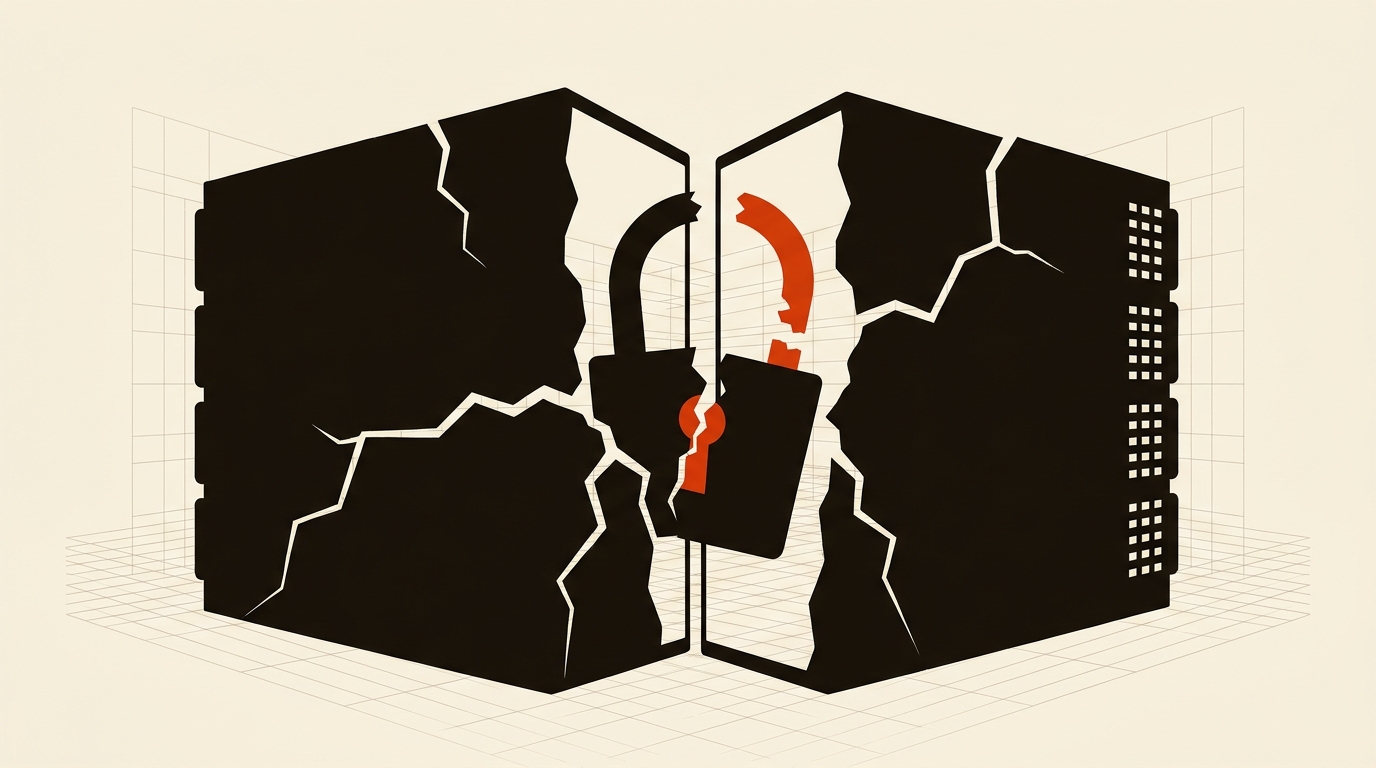
Compromised intermediate root certificates undermine public WebPKI trust, allowing network adversaries to forge valid TLS credentials for any web domain.
Short answer: Eight intermediate certificates issued by Indian certification authority eMudhra were discovered with fatally defective NIST P-384 private keys ranging between 3 and 8 bits of entropy. Several private keys were trivial integers, including the number 4. While the compromise mathematically allowed unauthorized TLS certificate minting for any domain, browser vendors and major CDNs blocked the certificates before rogue credentials appeared in Certificate Transparency logs.
1. What the cryptographic discovery revealed
On Saturday, October 17, 2026, Mozilla received an alert from a community member indicating that private keys belonging to eight eMudhra intermediate certificates were exposed. The issue entered public view when an advisory on an external site posted a message reading “We have a problem here – Wayne”, digitally signed using one of the live eMudhra intermediate private keys.
Under the NIST P-384 elliptic curve standard, a secure private key requires roughly 384 bits of entropy, producing 2^384 possible combinations (roughly 10^115). Instead, security researchers discovered keys with entropy as low as 3 to 8 bits.
Security researcher Scott Helme demonstrated that the private keys could be recovered in fractions of a second using standard consumer hardware:
“Not a number that starts with 4, or the number 4 followed by a few hundred random digits, just, 4… Another one is 56, and another is 115. I know, because I recovered all of them from their public certificates on my laptop just now, and it took less than a second.”
The full list of recovered private key values included 4, 56, 66, 115, 155, 156, 230, and 237. Ben Cartwright-Cox, director of BGP.tools, noted that the defect likely originated from testing or example code that accidentally leaked into production environments.
2. Infrastructure response and rapid revocation
Cloudflare detected the issue on October 19 at 17:00 UTC and began emergency mitigations across its proxy fleet, API gateways, and Zero Trust networks. The firm updated shared trust stores, origin authentication checks, Cloudflare Tunnel (cloudflared), and the Cloudflare One WARP client.
Browser vendors including Google Chrome, Mozilla Firefox, and Apple Safari enacted emergency blocks using rapid push revocation mechanisms, including Chrome CRLSets. While desktop browsers patched within hours, legacy builds such as Microsoft Edge on older Windows 10 versions lagged slightly in severing connections to vulnerable hosts.
Encrypted messaging networks that bypass the public WebPKI hierarchy, such as Signal, WhatsApp, and WireGuard, remained entirely unaffected by the compromise.
3. The long tail: Why cleanup exceeds standard patches
Because eMudhra has issued over 60 million digital certificates across its corporate lifetime, the remediation timeline outside browser engines presents severe operational hurdles. Exploiting these keys requires an active adversary-in-the-middle position, such as a compromised local Wi-Fi router, university gateway, or state-directed ISP intercept.
Filippo Valsorda, a cryptography maintainer for the Go programming language, warned that the remediation effort would stretch far longer than conventional web updates:
“This will be a massive cleanup job, bigger than Heartbleed. There will be a very, very long tail, IoT devices, Docker containers, forgotten Linux machines, unmaintained CLI tools that shipped their own copy of the roots (which is common in some ecosystems, like Python). Also, Linux distributions are still rolling out updates, some of them are not ready yet, and then system administrators will need to apply them to a lot of machines.”
The incident emphasizes the fragility of shared trust stores. Similar architectural challenges around verified code distribution and system boundaries have emerged across clean-room application development and local machine verification environments. While public Certificate Transparency logs recorded no active unauthorized issuances, unpatched backend services and embedded hardware remain exposed until local root stores receive updates.
Sources to check yourself
- Cloudflare Blog: Technical breakdown of intermediate certificate mitigations and customer guidance (October 20, 2026).
- The Register: Coverage of eMudhra private key entropy failures and research findings by Scott Helme and Dennis Jackson.
- Mozilla Cryptography Engineering: Bug tracking entries and root store distrust notifications.
Frequently asked questions
Q: Were passwords or encrypted web sessions stolen? A: No evidence indicates that existing sessions were decrypted. The defect allowed attackers with network interception access to mint new, unauthorized certificates rather than decrypting past TLS records.
Q: Why was the private key set to single digits like 4? A: Elliptic curve private keys require cryptographically secure random number generators. Engineers suspect placeholder or unit-test parameters accidentally reached live certificate generation systems.
Q: Do everyday web users need to take action? A: Desktop and mobile users who keep their browsers (Chrome, Firefox, Safari) and operating systems updated are protected. System administrators managing Linux distributions, Docker base images, or Python certifi bundles must update their root stores manually.
Reader discussion
Conversation for this story opens with memberships. Until then: found an error? Report it — we correct visibly.