Cut Off in Arunachal: Border Villagers Suffer While Troops Focus Inward
As China constructs dual-use villages and cuts off ancestral grazing lands in Arunachal Pradesh, thousands of security forces are deployed against student protesters at home.
Verdict: true, with context.
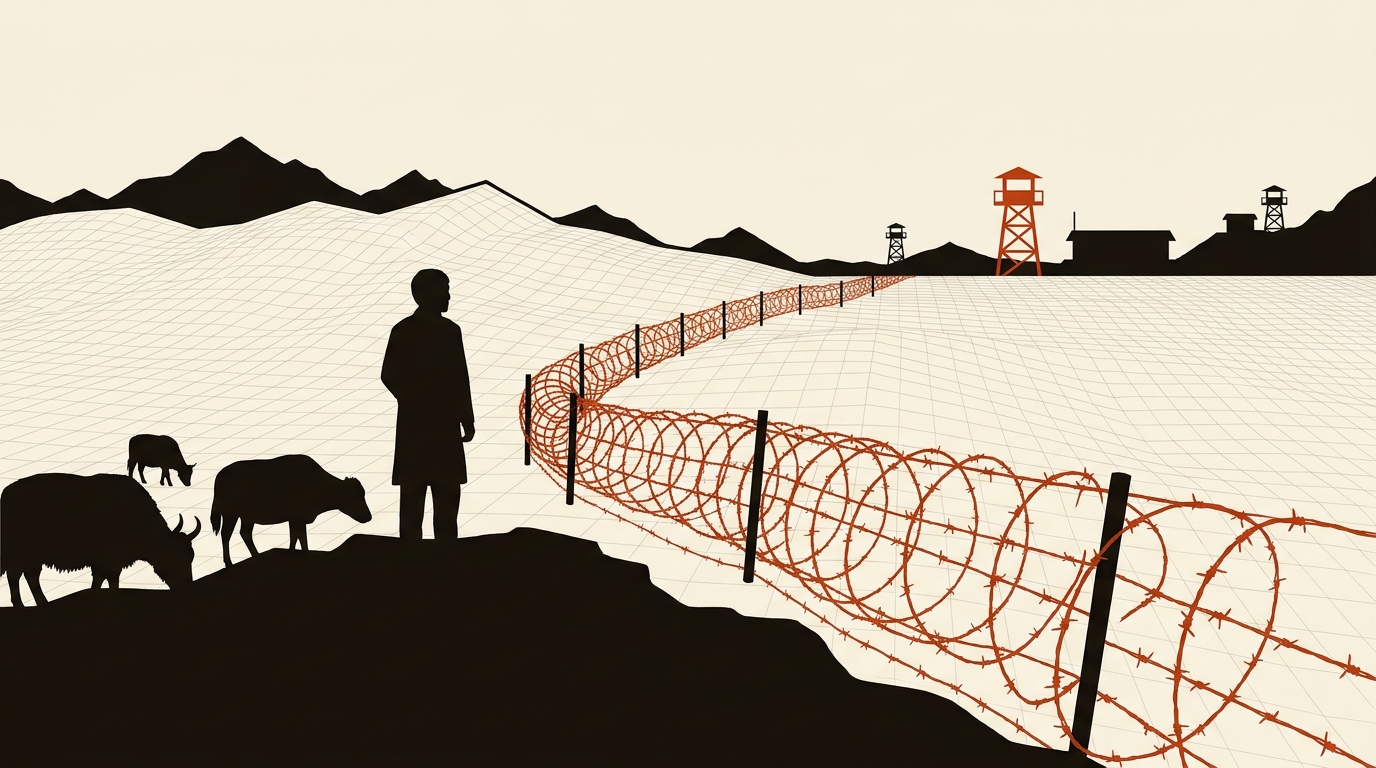
Frontier communities lose vital grazing lands and trade routes along the LAC while high-readiness central security forces remain concentrated on domestic protest control.
Short answer: The contrast in national priorities is accurate. Along the eastern Line of Actual Control, indigenous villagers in Arunachal Pradesh face ongoing loss of ancestral pasture due to Chinese dual-use border infrastructure. Simultaneously, the central government mobilizes thousands of paramilitary personnel and police to seal off New Delhi against peaceful student demonstrators.
1. What the viral post shows
Viral posts shared by student coalitions and defense analysts highlight a sharp split in state action. On one hand, reports from eastern Arunachal Pradesh describe Chinese militarized posts cutting into traditional pastures. On the other hand, central avenues in New Delhi are converted into high-security garrisons whenever youth gather to protest.
The posts cite satellite records showing rapid building of Chinese Xiaokang border settlements in contested valleys. In contrast, democratic gathering spots like Jantar Mantar see multi-layered steel barricades, water cannons, and mass detentions. Critics argue that state apparatus energy is directed at policing university youth rather than halting external border encroachment.
2. Ground reality in Arunachal: Xiaokang settlements and lost pasture
Along the Line of Actual Control (LAC) in Arunachal Pradesh, territorial pressure is an immediate reality for frontier residents. Across districts such as Tawang, Kurung Kumey, Upper Subansiri, and Anjaw, China has constructed fortified border settlements known as Xiaokang villages. Satellite surveys and defense reviews identify hundreds of these dual-use outposts erected along disputed Himalayan sectors.
For local pastoral communities, including Monpa and Mishmi herders, these developments bring immediate economic displacement. Herders depend on seasonal grazing paths across high mountain ridges. As foreign forward posts and security fences expand, herders find themselves blocked from customary summer pastures.
Local village councils report that grazing rights maintained for generations are now cut off by wire fencing and foreign patrols. Traditional trans-Himalayan trade trails remain severed. Frontier residents state that their movements face strict monitoring, while external forward garrisons establish permanent footholds on ridgelines.
3. The capital lockdown: Policing students over foreign threats
While Himalayan villagers seek stronger frontier protection, central authorities display immense logistical force inside the capital. As documented during the October 10 CJP protest crackdown and earlier demonstrations across central Delhi, thousands of security personnel routinely mobilize to block civic gatherings.
Units from the Central Reserve Police Force (CRPF), Rapid Action Force (RAF), and Delhi Police establish perimeter rings around university campuses and transit hubs. Roads leading to Parliament and administrative offices are shut down with iron barriers, container walls, and surveillance cameras.
Plainclothes officers, preventative detentions, and bus convoys are deployed to disperse young citizens demanding transparency. Students asking questions about voting rights, education policy, and civil liberties face immediate detention. This heavy internal deployment draws sharp public scrutiny when border communities report inadequate manpower and slow infrastructure response on remote frontiers.
4. What’s missing from the viral comparison
A clear institutional division exists in how India allocates defense and internal security forces. The guarding of the 3,488-kilometer Line of Actual Control falls under the Indian Army and the Indo-Tibetan Border Police (ITBP). In contrast, riot control in the capital is managed by the Delhi Police and central paramilitary reserves under the Ministry of Home Affairs.
Deploying police officers to Jantar Mantar does not directly remove an army rifleman from an eastern ridge. Mountain combat units cannot simply be swapped with urban riot squads.
The underlying grievance concerns political focus and resource priorities. Both domestic riot policing and border defense forces operate under central fiscal authority. When the state treats peaceful domestic youth as a national security risk, public trust erodes. Citizens observe extensive resources spent fortifying Delhi streets against young voters, while frontier herders face foreign expansion with limited recourse.
Sources to check yourself
- Ministry of External Affairs: Official transcripts on bilateral border negotiations, LAC infrastructure developments, and verified territorial statements.
- The Hindu National News: Field reporting on high-altitude grazing access restrictions and security deployments during New Delhi demonstrations.
- The Guardian India Section: Investigative coverage of Chinese border village construction in the eastern Himalayas and student protest policing.
Frequently asked questions
Q: What are Chinese Xiaokang villages along the Arunachal border?
A: Xiaokang settlements are state-sponsored, dual-use residential complexes built by China along disputed border sectors. They serve civilian habitation and forward military logistics.
Q: Are Indian villagers in Arunachal Pradesh losing access to ancestral grazing lands?
A: Yes. Local herders and council leaders in border districts have repeatedly reported that forward Chinese posts and buffer arrangements block access to traditional seasonal grazing grounds.
Q: Which forces guard the Line of Actual Control versus New Delhi protests?
A: Border defense is handled by the Indian Army and the Indo-Tibetan Border Police. Capital protest containment is handled by the Delhi Police along with central paramilitary units like the RAF and CRPF.
Reader discussion
Conversation for this story opens with memberships. Until then: found an error? Report it — we correct visibly.